
Digital citizen empowerment a sytematic literature review fusionado.pdf
Vista previa de texto
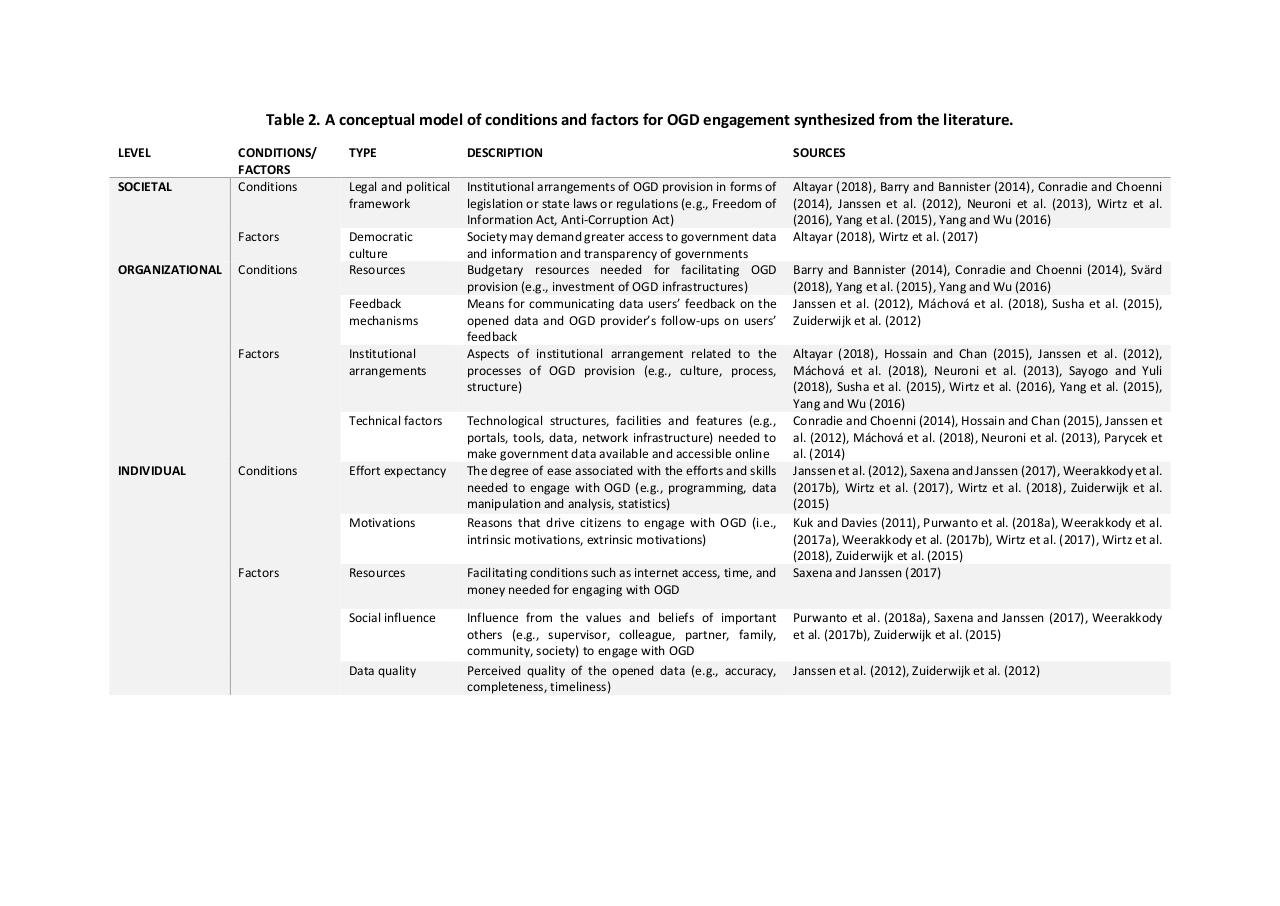
Table 2. A conceptual model of conditions and factors for OGD engagement synthesized from the literature.
LEVEL
SOCIETAL
ORGANIZATIONAL
CONDITIONS/
FACTORS
Conditions
TYPE
DESCRIPTION
SOURCES
Legal and political
framework
Factors
Democratic
culture
Resources
Institutional arrangements of OGD provision in forms of
legislation or state laws or regulations (e.g., Freedom of
Information Act, Anti-Corruption Act)
Society may demand greater access to government data
and information and transparency of governments
Budgetary resources needed for facilitating OGD
provision (e.g., investment of OGD infrastructures)
Means for communicating data users’ feedback on the
opened data and OGD provider’s follow-ups on users’
feedback
Aspects of institutional arrangement related to the
processes of OGD provision (e.g., culture, process,
structure)
Altayar (2018), Barry and Bannister (2014), Conradie and Choenni
(2014), Janssen et al. (2012), Neuroni et al. (2013), Wirtz et al.
(2016), Yang et al. (2015), Yang and Wu (2016)
Altayar (2018), Wirtz et al. (2017)
Conditions
Feedback
mechanisms
Factors
Institutional
arrangements
Technical factors
INDIVIDUAL
Conditions
Effort expectancy
Motivations
Factors
Technological structures, facilities and features (e.g.,
portals, tools, data, network infrastructure) needed to
make government data available and accessible online
The degree of ease associated with the efforts and skills
needed to engage with OGD (e.g., programming, data
manipulation and analysis, statistics)
Reasons that drive citizens to engage with OGD (i.e.,
intrinsic motivations, extrinsic motivations)
Resources
Facilitating conditions such as internet access, time, and
money needed for engaging with OGD
Social influence
Influence from the values and beliefs of important
others (e.g., supervisor, colleague, partner, family,
community, society) to engage with OGD
Perceived quality of the opened data (e.g., accuracy,
completeness, timeliness)
Data quality
Barry and Bannister (2014), Conradie and Choenni (2014), Svärd
(2018), Yang et al. (2015), Yang and Wu (2016)
Janssen et al. (2012), Máchová et al. (2018), Susha et al. (2015),
Zuiderwijk et al. (2012)
Altayar (2018), Hossain and Chan (2015), Janssen et al. (2012),
Máchová et al. (2018), Neuroni et al. (2013), Sayogo and Yuli
(2018), Susha et al. (2015), Wirtz et al. (2016), Yang et al. (2015),
Yang and Wu (2016)
Conradie and Choenni (2014), Hossain and Chan (2015), Janssen et
al. (2012), Máchová et al. (2018), Neuroni et al. (2013), Parycek et
al. (2014)
Janssen et al. (2012), Saxena and Janssen (2017), Weerakkody et al.
(2017b), Wirtz et al. (2017), Wirtz et al. (2018), Zuiderwijk et al.
(2015)
Kuk and Davies (2011), Purwanto et al. (2018a), Weerakkody et al.
(2017a), Weerakkody et al. (2017b), Wirtz et al. (2017), Wirtz et al.
(2018), Zuiderwijk et al. (2015)
Saxena and Janssen (2017)
Purwanto et al. (2018a), Saxena and Janssen (2017), Weerakkody
et al. (2017b), Zuiderwijk et al. (2015)
Janssen et al. (2012), Zuiderwijk et al. (2012)