
Digital citizen empowerment a sytematic literature review fusionado.pdf
Vista previa de texto
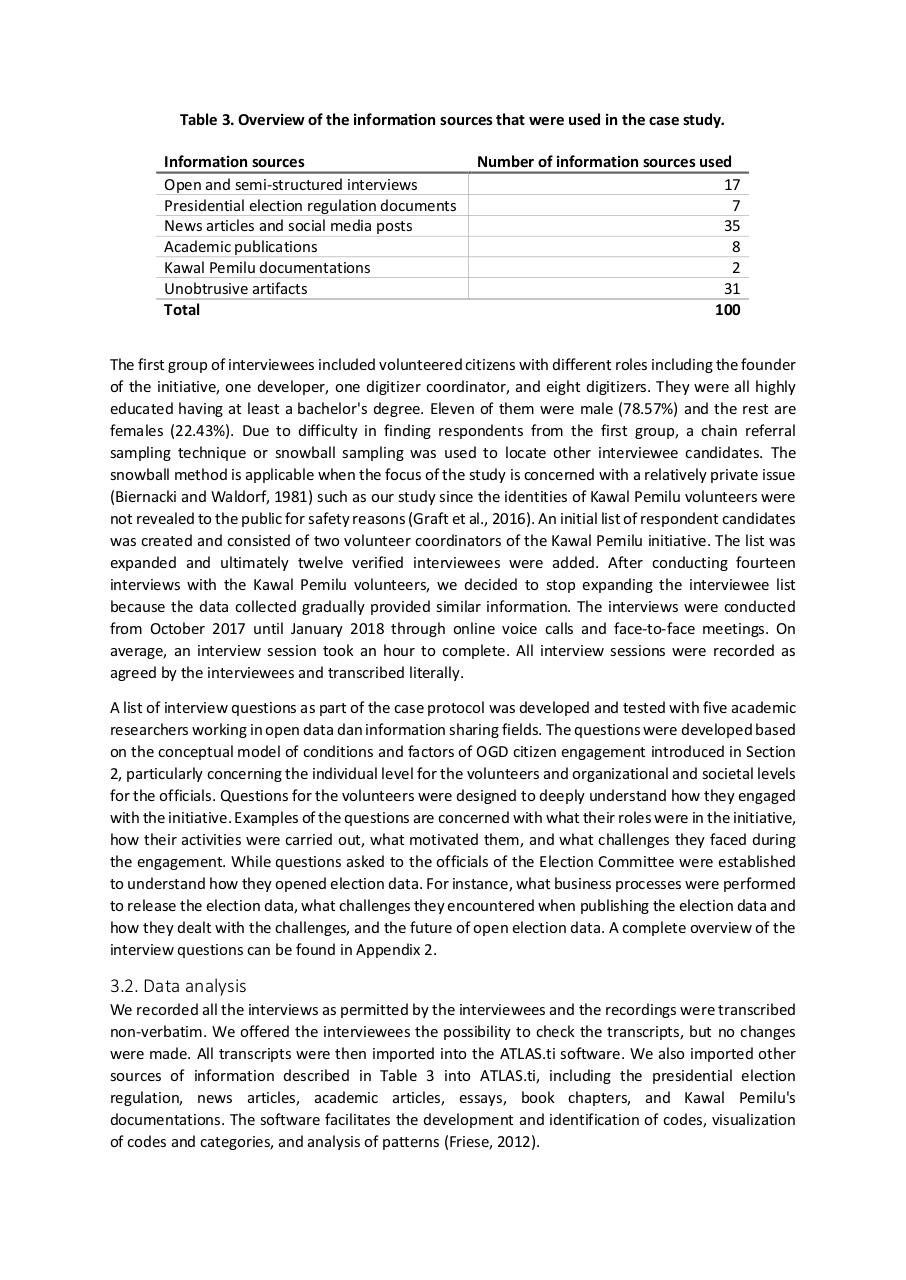
Table 3. Overview of the information sources that were used in the case study.
Information sources
Open and semi-structured interviews
Presidential election regulation documents
News articles and social media posts
Academic publications
Kawal Pemilu documentations
Unobtrusive artifacts
Total
Number of information sources used
17
7
35
8
2
31
100
The first group of interviewees included volunteered citizens with different roles including the founder
of the initiative, one developer, one digitizer coordinator, and eight digitizers. They were all highly
educated having at least a bachelor's degree. Eleven of them were male (78.57%) and the rest are
females (22.43%). Due to difficulty in finding respondents from the first group, a chain referral
sampling technique or snowball sampling was used to locate other interviewee candidates. The
snowball method is applicable when the focus of the study is concerned with a relatively private issue
(Biernacki and Waldorf, 1981) such as our study since the identities of Kawal Pemilu volunteers were
not revealed to the public for safety reasons (Graft et al., 2016). An initial list of respondent candidates
was created and consisted of two volunteer coordinators of the Kawal Pemilu initiative. The list was
expanded and ultimately twelve verified interviewees were added. After conducting fourteen
interviews with the Kawal Pemilu volunteers, we decided to stop expanding the interviewee list
because the data collected gradually provided similar information. The interviews were conducted
from October 2017 until January 2018 through online voice calls and face-to-face meetings. On
average, an interview session took an hour to complete. All interview sessions were recorded as
agreed by the interviewees and transcribed literally.
A list of interview questions as part of the case protocol was developed and tested with five academic
researchers working in open data dan information sharing fields. The questions were developed based
on the conceptual model of conditions and factors of OGD citizen engagement introduced in Section
2, particularly concerning the individual level for the volunteers and organizational and societal levels
for the officials. Questions for the volunteers were designed to deeply understand how they engaged
with the initiative. Examples of the questions are concerned with what their roles were in the initiative,
how their activities were carried out, what motivated them, and what challenges they faced during
the engagement. While questions asked to the officials of the Election Committee were established
to understand how they opened election data. For instance, what business processes were performed
to release the election data, what challenges they encountered when publishing the election data and
how they dealt with the challenges, and the future of open election data. A complete overview of the
interview questions can be found in Appendix 2.
3.2. Data analysis
We recorded all the interviews as permitted by the interviewees and the recordings were transcribed
non-verbatim. We offered the interviewees the possibility to check the transcripts, but no changes
were made. All transcripts were then imported into the ATLAS.ti software. We also imported other
sources of information described in Table 3 into ATLAS.ti, including the presidential election
regulation, news articles, academic articles, essays, book chapters, and Kawal Pemilu's
documentations. The software facilitates the development and identification of codes, visualization
of codes and categories, and analysis of patterns (Friese, 2012).