
Digital citizen empowerment a sytematic literature review fusionado.pdf
Vista previa de texto
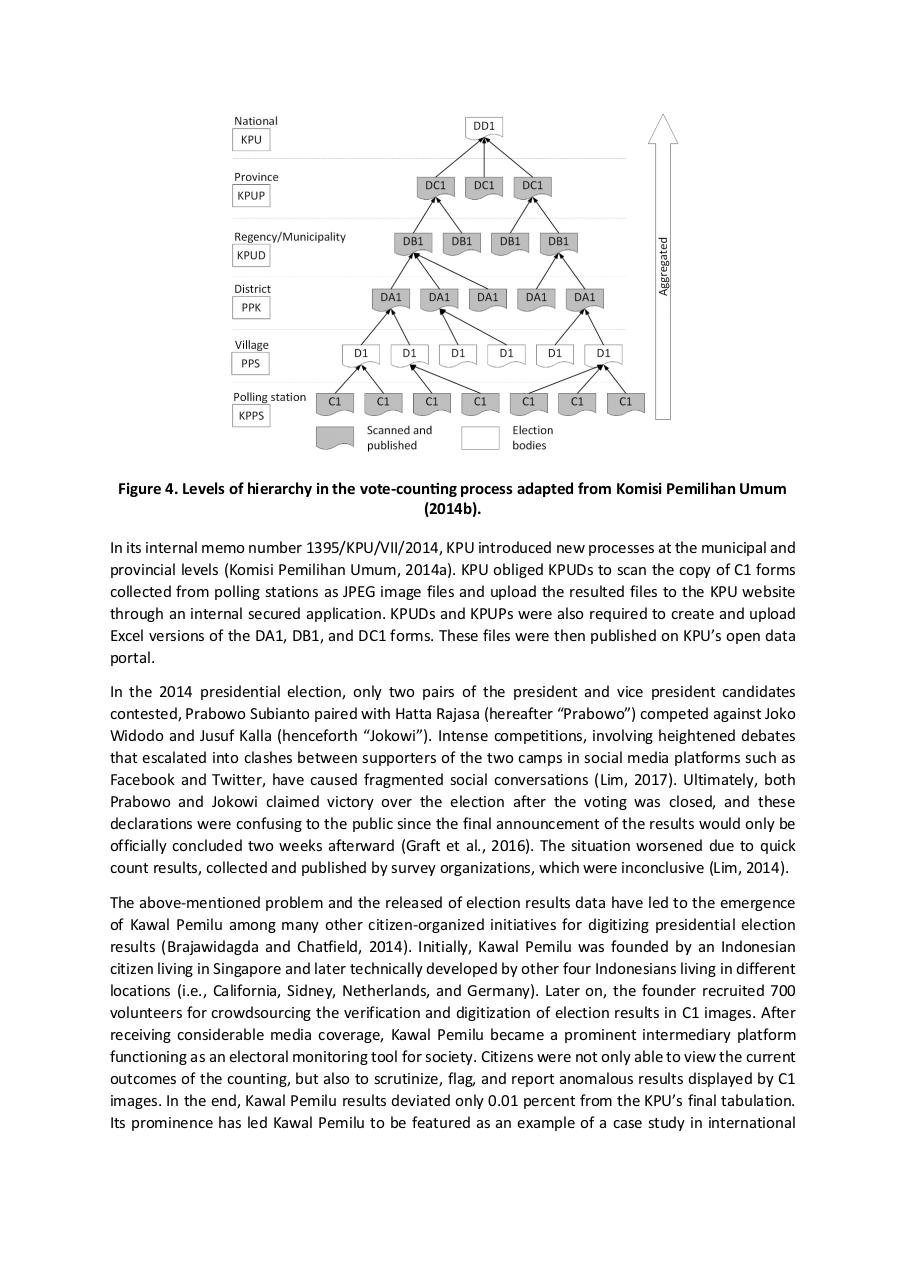
Figure 4. Levels of hierarchy in the vote-counting process adapted from Komisi Pemilihan Umum
(2014b).
In its internal memo number 1395/KPU/VII/2014, KPU introduced new processes at the municipal and
provincial levels (Komisi Pemilihan Umum, 2014a). KPU obliged KPUDs to scan the copy of C1 forms
collected from polling stations as JPEG image files and upload the resulted files to the KPU website
through an internal secured application. KPUDs and KPUPs were also required to create and upload
Excel versions of the DA1, DB1, and DC1 forms. These files were then published on KPU’s open data
portal.
In the 2014 presidential election, only two pairs of the president and vice president candidates
contested, Prabowo Subianto paired with Hatta Rajasa (hereafter “Prabowo”) competed against Joko
Widodo and Jusuf Kalla (henceforth “Jokowi”). Intense competitions, involving heightened debates
that escalated into clashes between supporters of the two camps in social media platforms such as
Facebook and Twitter, have caused fragmented social conversations (Lim, 2017). Ultimately, both
Prabowo and Jokowi claimed victory over the election after the voting was closed, and these
declarations were confusing to the public since the final announcement of the results would only be
officially concluded two weeks afterward (Graft et al., 2016). The situation worsened due to quick
count results, collected and published by survey organizations, which were inconclusive (Lim, 2014).
The above-mentioned problem and the released of election results data have led to the emergence
of Kawal Pemilu among many other citizen-organized initiatives for digitizing presidential election
results (Brajawidagda and Chatfield, 2014). Initially, Kawal Pemilu was founded by an Indonesian
citizen living in Singapore and later technically developed by other four Indonesians living in different
locations (i.e., California, Sidney, Netherlands, and Germany). Later on, the founder recruited 700
volunteers for crowdsourcing the verification and digitization of election results in C1 images. After
receiving considerable media coverage, Kawal Pemilu became a prominent intermediary platform
functioning as an electoral monitoring tool for society. Citizens were not only able to view the current
outcomes of the counting, but also to scrutinize, flag, and report anomalous results displayed by C1
images. In the end, Kawal Pemilu results deviated only 0.01 percent from the KPU’s final tabulation.
Its prominence has led Kawal Pemilu to be featured as an example of a case study in international