
tc3 97 61.pdf
Vista previa de texto
Mountaineering Equipment
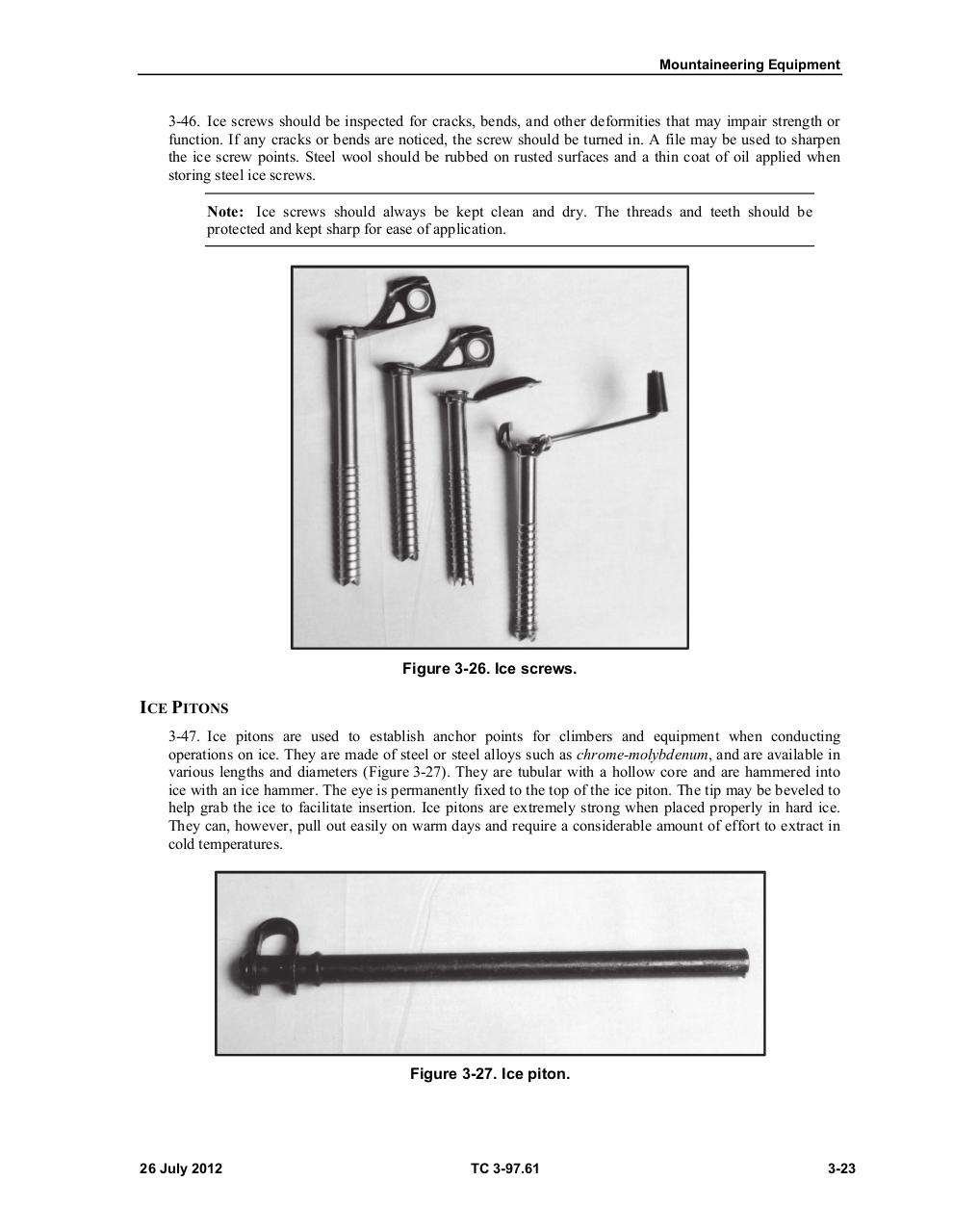
3-46. Ice screws should be inspected for cracks, bends, and other deformities that may impair strength or
function. If any cracks or bends are noticed, the screw should be turned in. A file may be used to sharpen
the ice screw points. Steel wool should be rubbed on rusted surfaces and a thin coat of oil applied when
storing steel ice screws.
Note: Ice screws should always be kept clean and dry. The threads and teeth should be
protected and kept sharp for ease of application.
Figure 3-26. Ice screws.
ICE PITONS
3-47. Ice pitons are used to establish anchor points for climbers and equipment when conducting
operations on ice. They are made of steel or steel alloys such as chrome-molybdenum, and are available in
various lengths and diameters (Figure 3-27). They are tubular with a hollow core and are hammered into
ice with an ice hammer. The eye is permanently fixed to the top of the ice piton. The tip may be beveled to
help grab the ice to facilitate insertion. Ice pitons are extremely strong when placed properly in hard ice.
They can, however, pull out easily on warm days and require a considerable amount of effort to extract in
cold temperatures.
Figure 3-27. Ice piton.
26 July 2012
TC 3-97.61
3-23