
tc3 97 61.pdf
Vista previa de texto
Mountaineering Equipment
HELMETS
3-11. The para-aramid synthetic fiber ballistic helmet can be used for most basic mountaineering tasks. It
must be fitted with parachute retention straps and the foam impact pad (Figure 3-6). The level 2 and 3
mountaineer will need a lighter weight helmet for specific climbing scenerios. Several civilian
manufacturers produce an effective helmet. Whichever helmet is selected, it should be designed specifically
for mountaineering and adjustable so the user can add a hat under it when needed.
Figure 3-6. Helmets.
EYEWEAR
3-12. The military supply system does not currently provide adequate eyewear for mountaineering.
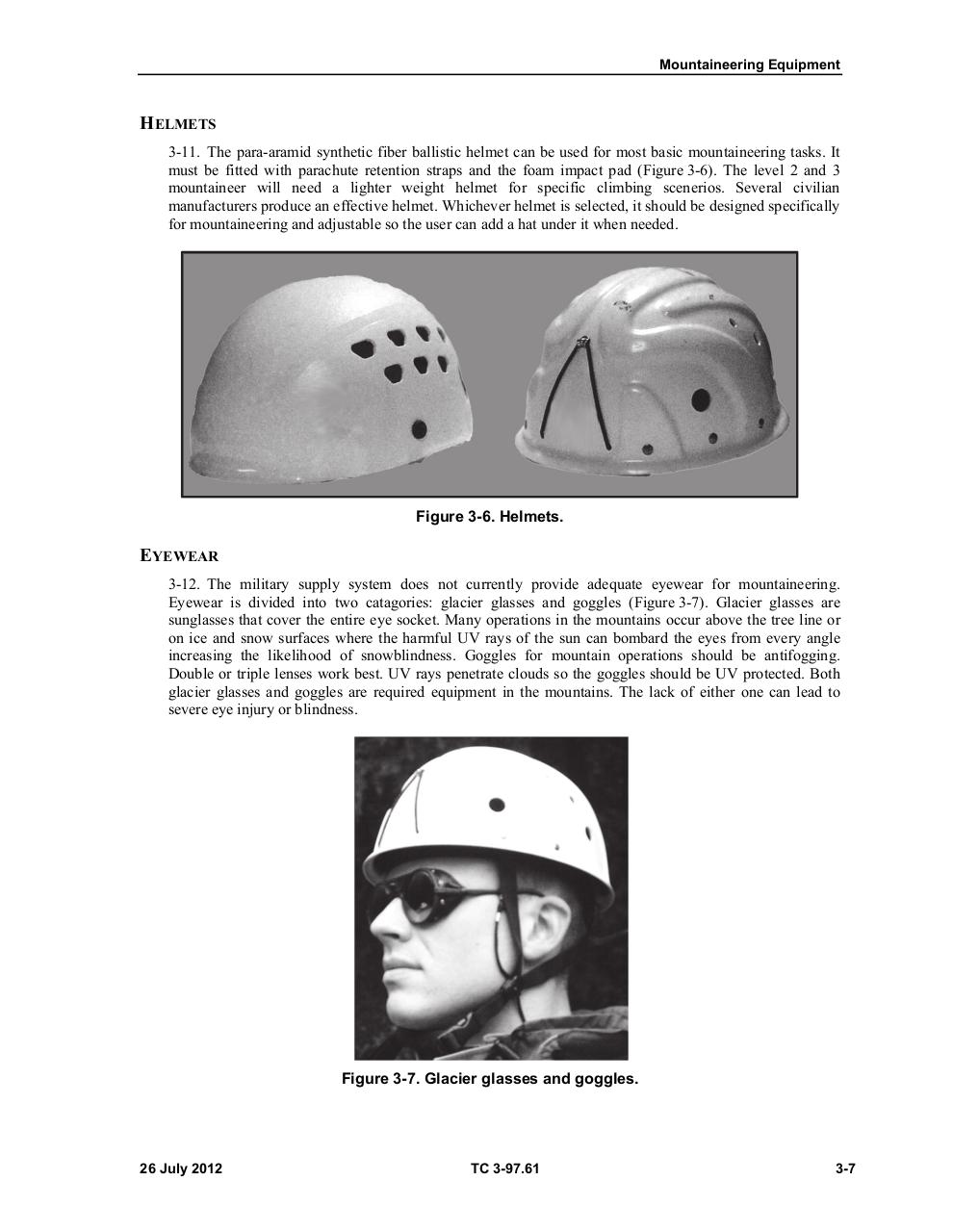
Eyewear is divided into two catagories: glacier glasses and goggles (Figure 3-7). Glacier glasses are
sunglasses that cover the entire eye socket. Many operations in the mountains occur above the tree line or
on ice and snow surfaces where the harmful UV rays of the sun can bombard the eyes from every angle
increasing the likelihood of snowblindness. Goggles for mountain operations should be antifogging.
Double or triple lenses work best. UV rays penetrate clouds so the goggles should be UV protected. Both
glacier glasses and goggles are required equipment in the mountains. The lack of either one can lead to
severe eye injury or blindness.
Figure 3-7. Glacier glasses and goggles.
26 July 2012
TC 3-97.61
3-7