
Some Notes on the History of the French Cuisine. Carlos Mirasierras.pdf
Vista previa de texto
Some Notes on the History of the French Cuisine. From the Middles Ages to late 20th century. Carlos Mirasierras
early Middle Ages as rice was a late introduction to Europe and the potato was only
introduced in 1536, with a much later date for widespread usage. Barley, oat and rye
among the poor, and wheat for the governing classes, were eaten as bread, porridge,
gruel and pasta by all members of society. Fava beans and vegetables were important
supplements to the cereal-based diet of the lower orders. (Phaseolus beans, today the
"common bean," were of New World origin and were introduced after the Columbian
Exchange in the 16th century.)
Meat was more expensive and therefore
more prestigious and in the form of game
was common only on the tables of the
nobility. The most prevalent butcher's
meats were pork, chicken and other
domestic fowl; beef, which required
greater investment in land, was less
common. Cod and herring were
mainstays
among
the
northern
populations; dried, smoked or salted they
made their way far inland, but a wide
variety of other saltwater and freshwater
fish was also eaten.
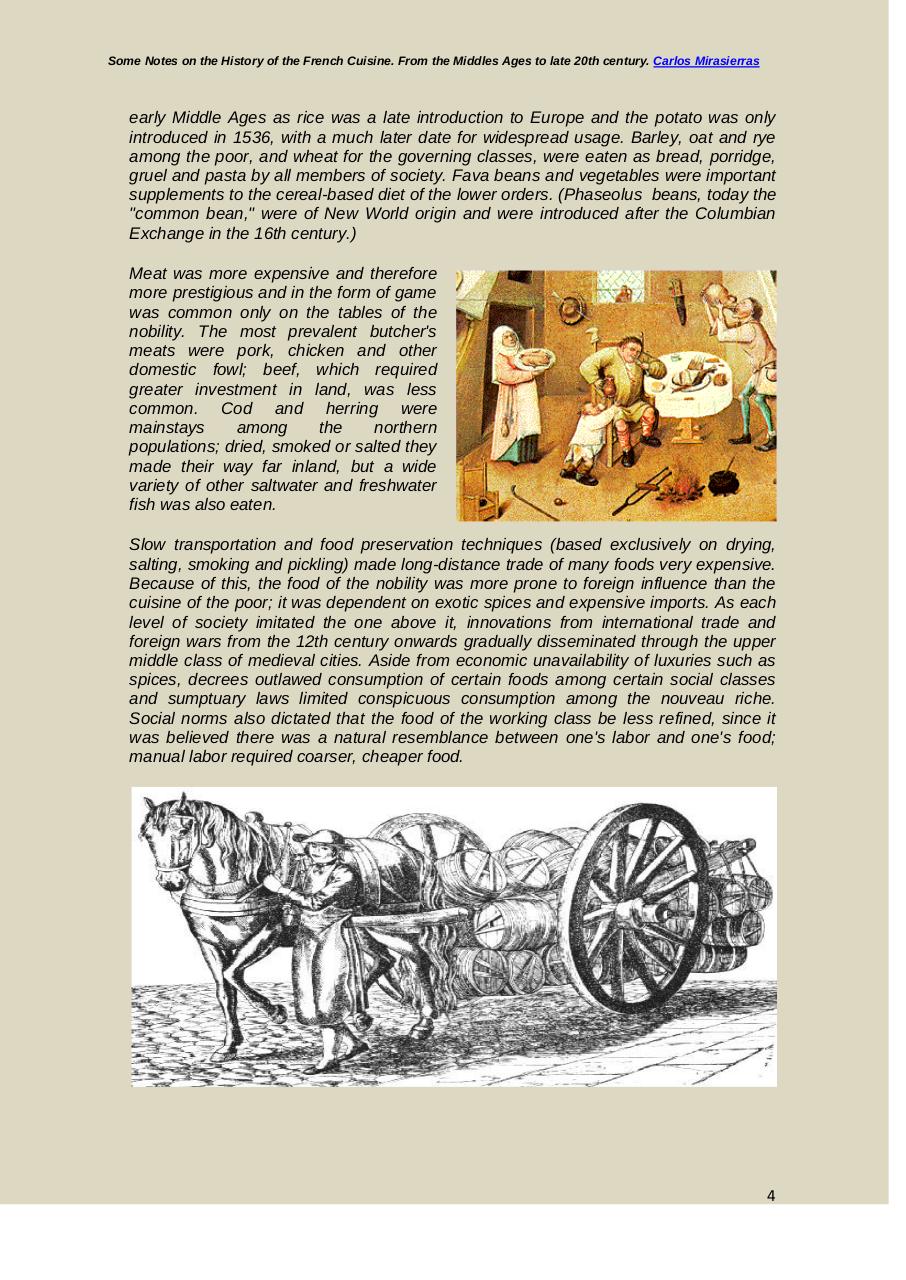
Slow transportation and food preservation techniques (based exclusively on drying,
salting, smoking and pickling) made long-distance trade of many foods very expensive.
Because of this, the food of the nobility was more prone to foreign influence than the
cuisine of the poor; it was dependent on exotic spices and expensive imports. As each
level of society imitated the one above it, innovations from international trade and
foreign wars from the 12th century onwards gradually disseminated through the upper
middle class of medieval cities. Aside from economic unavailability of luxuries such as
spices, decrees outlawed consumption of certain foods among certain social classes
and sumptuary laws limited conspicuous consumption among the nouveau riche.
Social norms also dictated that the food of the working class be less refined, since it
was believed there was a natural resemblance between one's labor and one's food;
manual labor required coarser, cheaper food.
4