
Some Notes on the History of the French Cuisine. Carlos Mirasierras.pdf
Vista previa de texto
Some Notes on the History of the French Cuisine. From the Middles Ages to late 20th century. Carlos Mirasierras
History
Over centuries the French cuisine has evolved
extensively thanks to local and foreign influences.
The national cuisine began to take shape during
the Middle Ages through the work of skilled chefs
who served the French nobility. The city of Paris
was the center of many innovative movements
led by royal chefs that eventually gave birth to the
modern French cuisine that we can enjoy today.
This cuisine eventually spread throughout the
country and reached other countries through
overseas export trade and colonization, which in
turn brought numerous other influences from
around the world.
Middle Ages
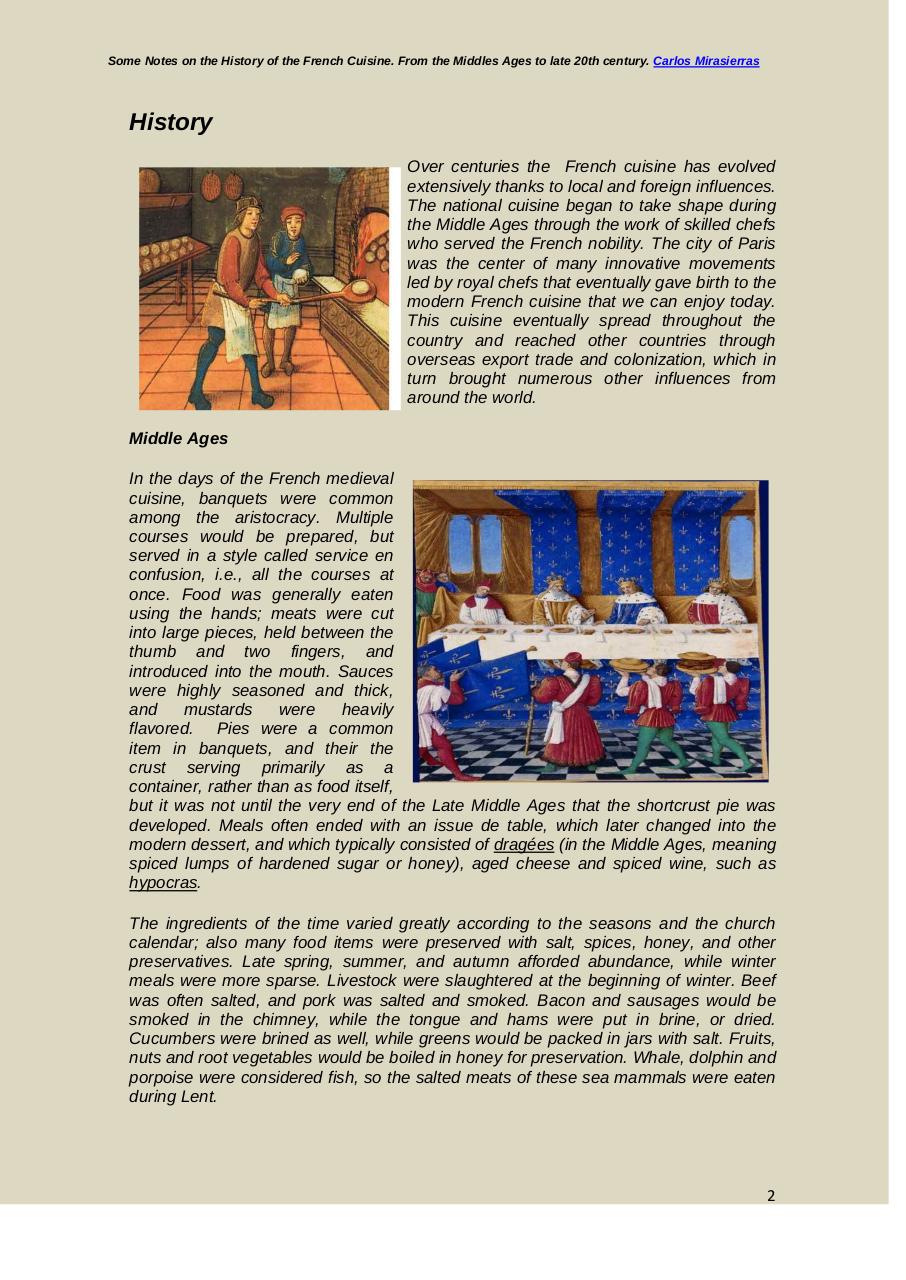
In the days of the French medieval
cuisine, banquets were common
among the aristocracy. Multiple
courses would be prepared, but
served in a style called service en
confusion, i.e., all the courses at
once. Food was generally eaten
using the hands; meats were cut
into large pieces, held between the
thumb and two fingers, and
introduced into the mouth. Sauces
were highly seasoned and thick,
and
mustards
were
heavily
flavored. Pies were a common
item in banquets, and their the
crust serving primarily as a
container, rather than as food itself,
but it was not until the very end of the Late Middle Ages that the shortcrust pie was
developed. Meals often ended with an issue de table, which later changed into the
modern dessert, and which typically consisted of dragées (in the Middle Ages, meaning
spiced lumps of hardened sugar or honey), aged cheese and spiced wine, such as
hypocras.
The ingredients of the time varied greatly according to the seasons and the church
calendar; also many food items were preserved with salt, spices, honey, and other
preservatives. Late spring, summer, and autumn afforded abundance, while winter
meals were more sparse. Livestock were slaughtered at the beginning of winter. Beef
was often salted, and pork was salted and smoked. Bacon and sausages would be
smoked in the chimney, while the tongue and hams were put in brine, or dried.
Cucumbers were brined as well, while greens would be packed in jars with salt. Fruits,
nuts and root vegetables would be boiled in honey for preservation. Whale, dolphin and
porpoise were considered fish, so the salted meats of these sea mammals were eaten
during Lent.
2