
Digital citizen empowerment a sytematic literature review fusionado.pdf
Vista previa de texto
6
S. SHARMA ET AL.
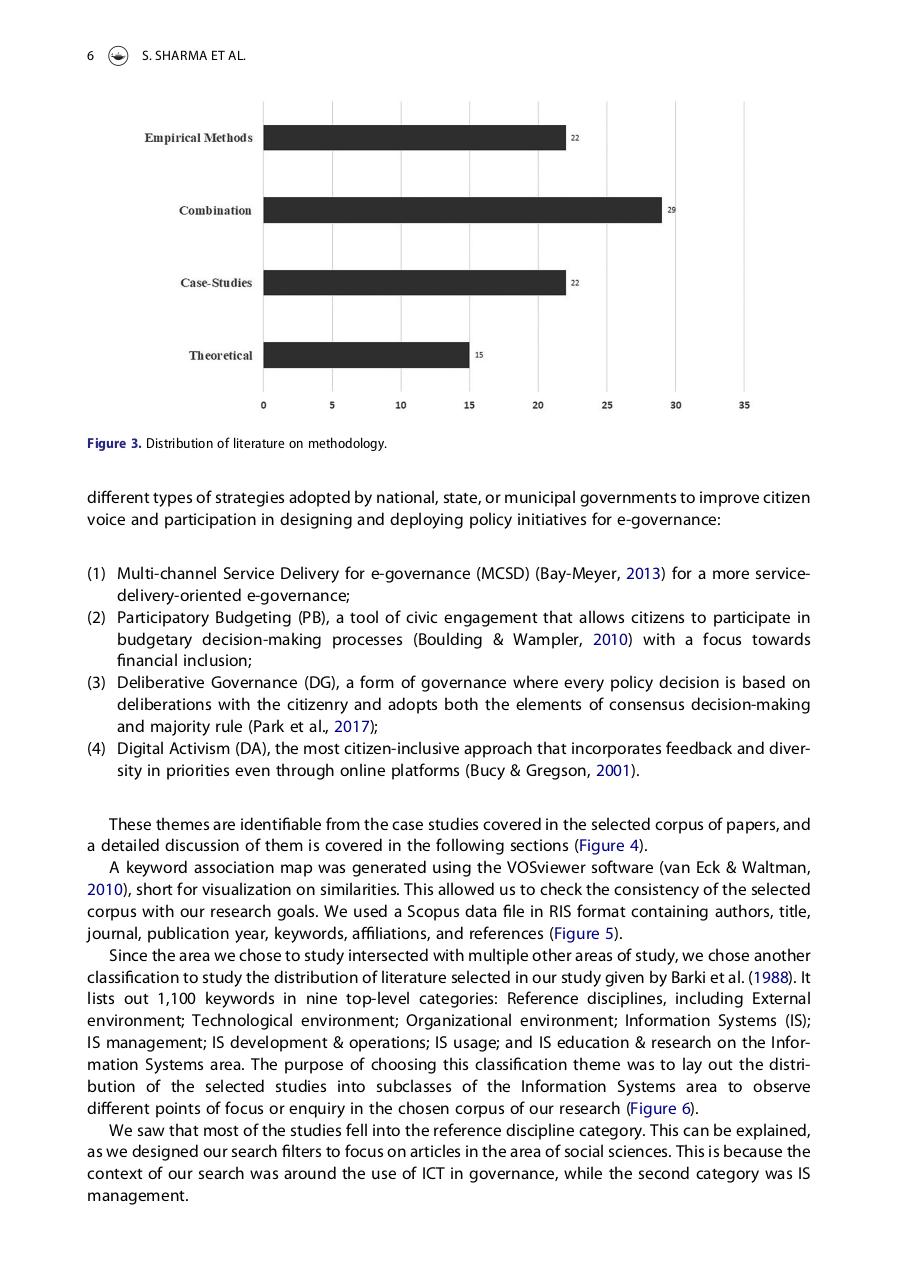
Figure 3. Distribution of literature on methodology.
different types of strategies adopted by national, state, or municipal governments to improve citizen
voice and participation in designing and deploying policy initiatives for e-governance:
(1) Multi-channel Service Delivery for e-governance (MCSD) (Bay-Meyer, 2013) for a more servicedelivery-oriented e-governance;
(2) Participatory Budgeting (PB), a tool of civic engagement that allows citizens to participate in
budgetary decision-making processes (Boulding & Wampler, 2010) with a focus towards
financial inclusion;
(3) Deliberative Governance (DG), a form of governance where every policy decision is based on
deliberations with the citizenry and adopts both the elements of consensus decision-making
and majority rule (Park et al., 2017);
(4) Digital Activism (DA), the most citizen-inclusive approach that incorporates feedback and diversity in priorities even through online platforms (Bucy & Gregson, 2001).
These themes are identifiable from the case studies covered in the selected corpus of papers, and
a detailed discussion of them is covered in the following sections (Figure 4).
A keyword association map was generated using the VOSviewer software (van Eck & Waltman,
2010), short for visualization on similarities. This allowed us to check the consistency of the selected
corpus with our research goals. We used a Scopus data file in RIS format containing authors, title,
journal, publication year, keywords, affiliations, and references (Figure 5).
Since the area we chose to study intersected with multiple other areas of study, we chose another
classification to study the distribution of literature selected in our study given by Barki et al. (1988). It
lists out 1,100 keywords in nine top-level categories: Reference disciplines, including External
environment; Technological environment; Organizational environment; Information Systems (IS);
IS management; IS development & operations; IS usage; and IS education & research on the Information Systems area. The purpose of choosing this classification theme was to lay out the distribution of the selected studies into subclasses of the Information Systems area to observe
different points of focus or enquiry in the chosen corpus of our research (Figure 6).
We saw that most of the studies fell into the reference discipline category. This can be explained,
as we designed our search filters to focus on articles in the area of social sciences. This is because the
context of our search was around the use of ICT in governance, while the second category was IS
management.