
Digital citizen empowerment a sytematic literature review fusionado.pdf
Vista previa de texto
14
S. SHARMA ET AL.
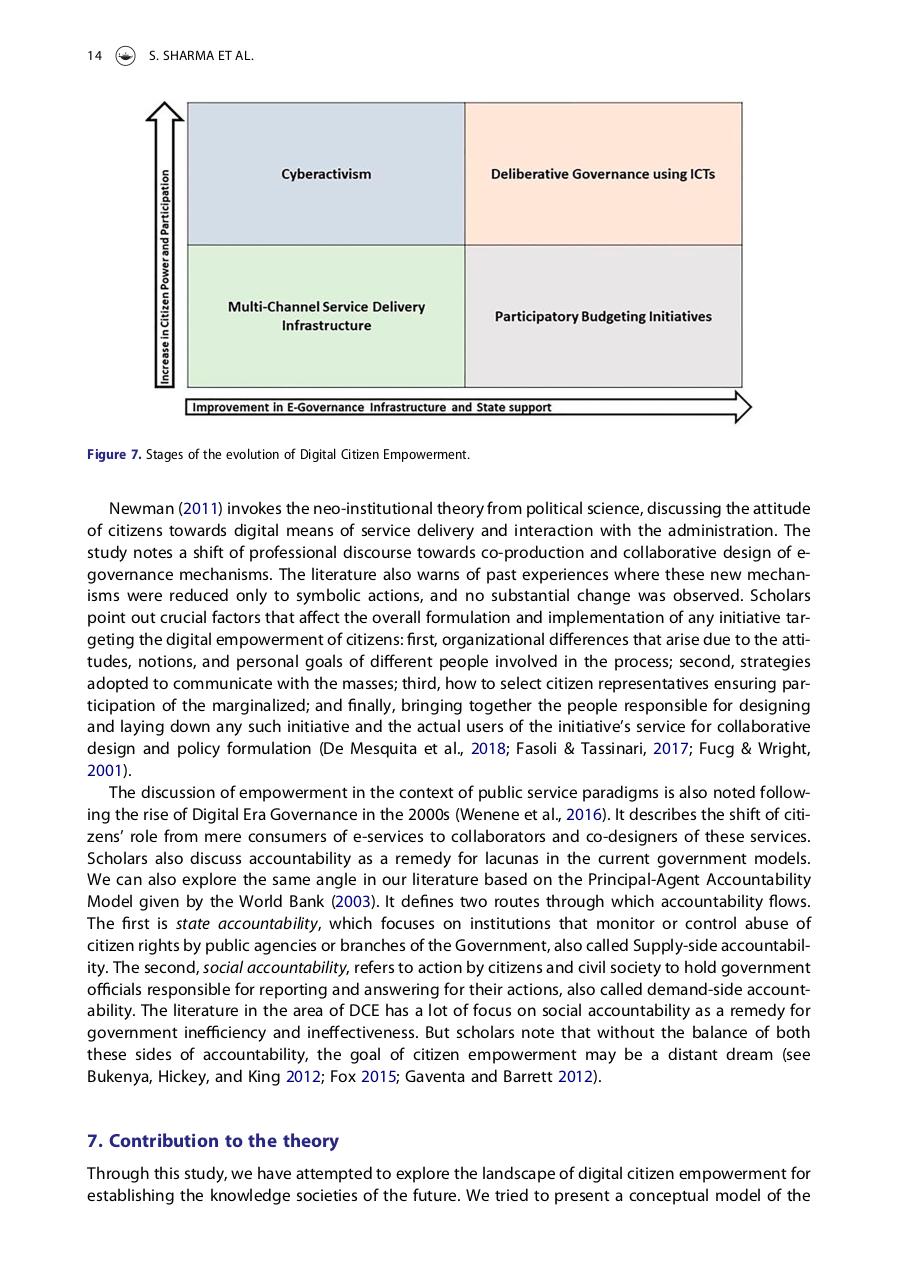
Figure 7. Stages of the evolution of Digital Citizen Empowerment.
Newman (2011) invokes the neo-institutional theory from political science, discussing the attitude
of citizens towards digital means of service delivery and interaction with the administration. The
study notes a shift of professional discourse towards co-production and collaborative design of egovernance mechanisms. The literature also warns of past experiences where these new mechanisms were reduced only to symbolic actions, and no substantial change was observed. Scholars
point out crucial factors that affect the overall formulation and implementation of any initiative targeting the digital empowerment of citizens: first, organizational differences that arise due to the attitudes, notions, and personal goals of different people involved in the process; second, strategies
adopted to communicate with the masses; third, how to select citizen representatives ensuring participation of the marginalized; and finally, bringing together the people responsible for designing
and laying down any such initiative and the actual users of the initiative’s service for collaborative
design and policy formulation (De Mesquita et al., 2018; Fasoli & Tassinari, 2017; Fucg & Wright,
2001).
The discussion of empowerment in the context of public service paradigms is also noted following the rise of Digital Era Governance in the 2000s (Wenene et al., 2016). It describes the shift of citizens’ role from mere consumers of e-services to collaborators and co-designers of these services.
Scholars also discuss accountability as a remedy for lacunas in the current government models.
We can also explore the same angle in our literature based on the Principal-Agent Accountability
Model given by the World Bank (2003). It defines two routes through which accountability flows.
The first is state accountability, which focuses on institutions that monitor or control abuse of
citizen rights by public agencies or branches of the Government, also called Supply-side accountability. The second, social accountability, refers to action by citizens and civil society to hold government
officials responsible for reporting and answering for their actions, also called demand-side accountability. The literature in the area of DCE has a lot of focus on social accountability as a remedy for
government inefficiency and ineffectiveness. But scholars note that without the balance of both
these sides of accountability, the goal of citizen empowerment may be a distant dream (see
Bukenya, Hickey, and King 2012; Fox 2015; Gaventa and Barrett 2012).
7. Contribution to the theory
Through this study, we have attempted to explore the landscape of digital citizen empowerment for
establishing the knowledge societies of the future. We tried to present a conceptual model of the