
Digital citizen empowerment a sytematic literature review fusionado.pdf
Vista previa de texto
12
S. SHARMA ET AL.
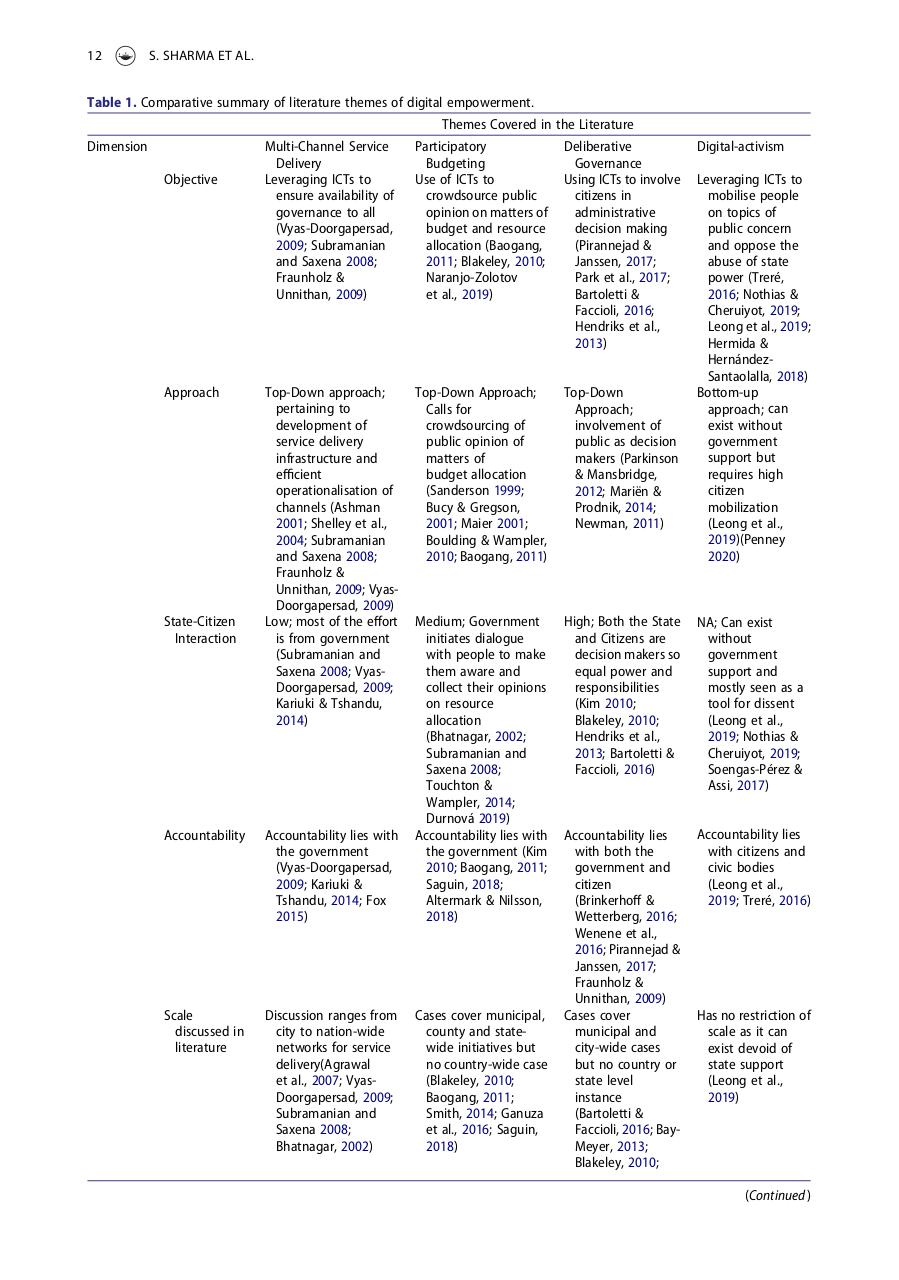
Table 1. Comparative summary of literature themes of digital empowerment.
Themes Covered in the Literature
Dimension
Objective
Approach
State-Citizen
Interaction
Multi-Channel Service
Delivery
Leveraging ICTs to
ensure availability of
governance to all
(Vyas-Doorgapersad,
2009; Subramanian
and Saxena 2008;
Fraunholz &
Unnithan, 2009)
Participatory
Budgeting
Use of ICTs to
crowdsource public
opinion on matters of
budget and resource
allocation (Baogang,
2011; Blakeley, 2010;
Naranjo-Zolotov
et al., 2019)
Deliberative
Governance
Using ICTs to involve
citizens in
administrative
decision making
(Pirannejad &
Janssen, 2017;
Park et al., 2017;
Bartoletti &
Faccioli, 2016;
Hendriks et al.,
2013)
Top-Down approach;
pertaining to
development of
service delivery
infrastructure and
efficient
operationalisation of
channels (Ashman
2001; Shelley et al.,
2004; Subramanian
and Saxena 2008;
Fraunholz &
Unnithan, 2009; VyasDoorgapersad, 2009)
Low; most of the effort
is from government
(Subramanian and
Saxena 2008; VyasDoorgapersad, 2009;
Kariuki & Tshandu,
2014)
Top-Down Approach;
Calls for
crowdsourcing of
public opinion of
matters of
budget allocation
(Sanderson 1999;
Bucy & Gregson,
2001; Maier 2001;
Boulding & Wampler,
2010; Baogang, 2011)
Top-Down
Approach;
involvement of
public as decision
makers (Parkinson
& Mansbridge,
2012; Mariën &
Prodnik, 2014;
Newman, 2011)
High; Both the State
and Citizens are
decision makers so
equal power and
responsibilities
(Kim 2010;
Blakeley, 2010;
Hendriks et al.,
2013; Bartoletti &
Faccioli, 2016)
NA; Can exist
without
government
support and
mostly seen as a
tool for dissent
(Leong et al.,
2019; Nothias &
Cheruiyot, 2019;
Soengas-Pérez &
Assi, 2017)
Accountability lies
with both the
government and
citizen
(Brinkerhoff &
Wetterberg, 2016;
Wenene et al.,
2016; Pirannejad &
Janssen, 2017;
Fraunholz &
Unnithan, 2009)
Cases cover
municipal and
city-wide cases
but no country or
state level
instance
(Bartoletti &
Faccioli, 2016; BayMeyer, 2013;
Blakeley, 2010;
Accountability lies
with citizens and
civic bodies
(Leong et al.,
2019; Treré, 2016)
Accountability
Accountability lies with
the government
(Vyas-Doorgapersad,
2009; Kariuki &
Tshandu, 2014; Fox
2015)
Medium; Government
initiates dialogue
with people to make
them aware and
collect their opinions
on resource
allocation
(Bhatnagar, 2002;
Subramanian and
Saxena 2008;
Touchton &
Wampler, 2014;
Durnová 2019)
Accountability lies with
the government (Kim
2010; Baogang, 2011;
Saguin, 2018;
Altermark & Nilsson,
2018)
Scale
discussed in
literature
Discussion ranges from
city to nation-wide
networks for service
delivery(Agrawal
et al., 2007; VyasDoorgapersad, 2009;
Subramanian and
Saxena 2008;
Bhatnagar, 2002)
Cases cover municipal,
county and statewide initiatives but
no country-wide case
(Blakeley, 2010;
Baogang, 2011;
Smith, 2014; Ganuza
et al., 2016; Saguin,
2018)
Digital-activism
Leveraging ICTs to
mobilise people
on topics of
public concern
and oppose the
abuse of state
power (Treré,
2016; Nothias &
Cheruiyot, 2019;
Leong et al., 2019;
Hermida &
HernándezSantaolalla, 2018)
Bottom-up
approach; can
exist without
government
support but
requires high
citizen
mobilization
(Leong et al.,
2019)(Penney
2020)
Has no restriction of
scale as it can
exist devoid of
state support
(Leong et al.,
2019)
(Continued )