
tc3 97 61.pdf
Vista previa de texto
Mountain Living
Type of Mission
2-56. Combat action requiring prolonged immobility and long hours of exposure to low temperatures, or
not having an opportunity to warm up increases the possibility of cold injuries.
Terrain
2-57. Minimal cover and wet conditions increase the potential for cold injury.
Clothing
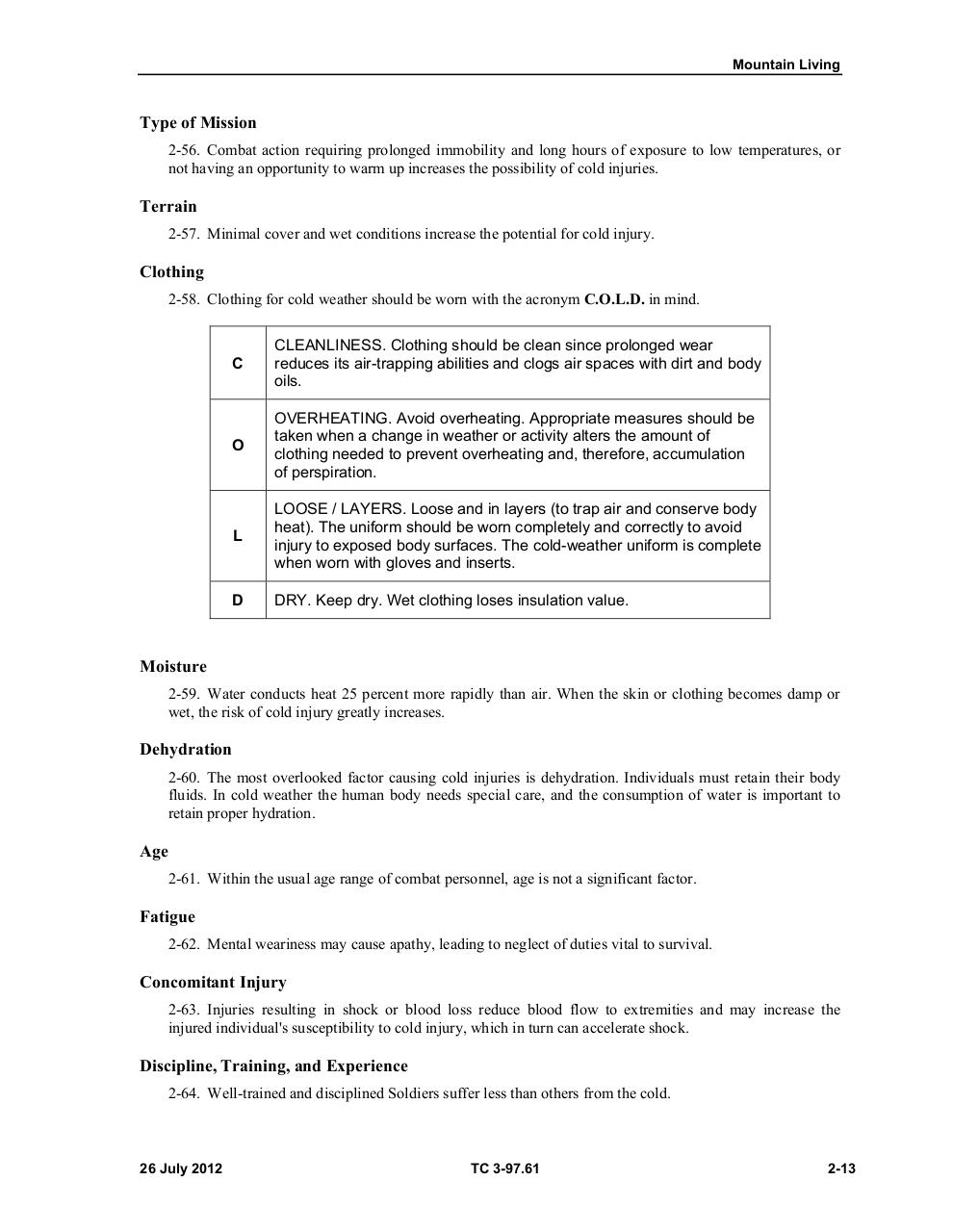
2-58. Clothing for cold weather should be worn with the acronym C.O.L.D. in mind.
C
CLEANLINESS. Clothing should be clean since prolonged wear
reduces its air-trapping abilities and clogs air spaces with dirt and body
oils.
O
OVERHEATING. Avoid overheating. Appropriate measures should be
taken when a change in weather or activity alters the amount of
clothing needed to prevent overheating and, therefore, accumulation
of perspiration.
L
LOOSE / LAYERS. Loose and in layers (to trap air and conserve body
heat). The uniform should be worn completely and correctly to avoid
injury to exposed body surfaces. The cold-weather uniform is complete
when worn with gloves and inserts.
D
DRY. Keep dry. Wet clothing loses insulation value.
Moisture
2-59. Water conducts heat 25 percent more rapidly than air. When the skin or clothing becomes damp or
wet, the risk of cold injury greatly increases.
Dehydration
2-60. The most overlooked factor causing cold injuries is dehydration. Individuals must retain their body
fluids. In cold weather the human body needs special care, and the consumption of water is important to
retain proper hydration.
Age
2-61. Within the usual age range of combat personnel, age is not a significant factor.
Fatigue
2-62. Mental weariness may cause apathy, leading to neglect of duties vital to survival.
Concomitant Injury
2-63. Injuries resulting in shock or blood loss reduce blood flow to extremities and may increase the
injured individual's susceptibility to cold injury, which in turn can accelerate shock.
Discipline, Training, and Experience
2-64. Well-trained and disciplined Soldiers suffer less than others from the cold.
26 July 2012
TC 3-97.61
2-13