
tc3 97 61.pdf
Vista previa de texto
Chapter 2
Cooling power of wind
expressed as an equivalent chill temperature (under calm conditions)
ESTIMATED
WIND SPEED
(IN MPH)
ACTUAL THERMOMETER READING (F)
50
40
30
20
10
0
-10
-20
-30
-40
-50
-60
EQUIVALENT TEMPERATURES (F)
Calm
50
40
30
20
10
0
-10
-20
-30
-40
-50
-60
5
48
37
27
16
6
-5
-15
-26
-36
-47
-57
-68
10
40
28
16
4
-9
-24
-33
-46
-58
-70
-83
-95
15
36
22
9
-5
-18
-32
-45
-58
-72
-85
-99
-112
20
32
18
4
-10
-25
-39
-53
-67
-82
-96
-110
-124
25
30
16
0
-15
-29
-44
-59
-74
-88
-104
-118
-133
30
28
13
-2
-18
-33
-48
-63
-79
-94
-109
-125
-140
35
27
11
-4
-21
-35
-51
-67
-82
-98
-113
-129
-145
40
26
10
-6
-21
-37
-53
-69
-85
-100
-116
-132
-148
Winds greater
than 40 MPH
have little
additional effect.
LITTLE DANGER
(for properly clothed
person) Maximum
danger of false sense of
security.
INCREASING
DANGER
Danger from
freezing of
exposed flesh.
GREAT DANGER
Trench foot and immersion foot may occur at any point on this chart.
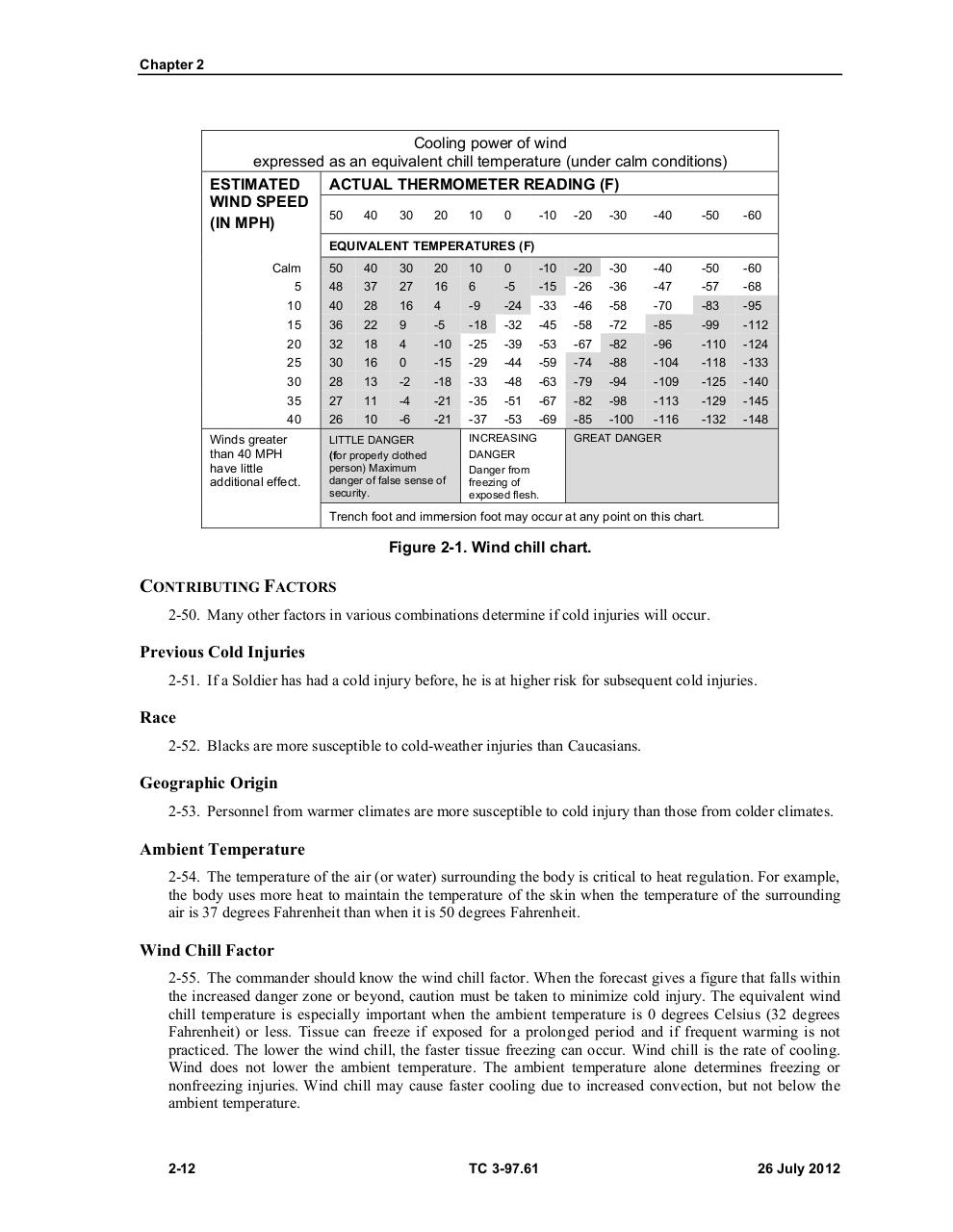
Figure 2-1. Wind chill chart.
CONTRIBUTING FACTORS
2-50. Many other factors in various combinations determine if cold injuries will occur.
Previous Cold Injuries
2-51. If a Soldier has had a cold injury before, he is at higher risk for subsequent cold injuries.
Race
2-52. Blacks are more susceptible to cold-weather injuries than Caucasians.
Geographic Origin
2-53. Personnel from warmer climates are more susceptible to cold injury than those from colder climates.
Ambient Temperature
2-54. The temperature of the air (or water) surrounding the body is critical to heat regulation. For example,
the body uses more heat to maintain the temperature of the skin when the temperature of the surrounding
air is 37 degrees Fahrenheit than when it is 50 degrees Fahrenheit.
Wind Chill Factor
2-55. The commander should know the wind chill factor. When the forecast gives a figure that falls within
the increased danger zone or beyond, caution must be taken to minimize cold injury. The equivalent wind
chill temperature is especially important when the ambient temperature is 0 degrees Celsius (32 degrees
Fahrenheit) or less. Tissue can freeze if exposed for a prolonged period and if frequent warming is not
practiced. The lower the wind chill, the faster tissue freezing can occur. Wind chill is the rate of cooling.
Wind does not lower the ambient temperature. The ambient temperature alone determines freezing or
nonfreezing injuries. Wind chill may cause faster cooling due to increased convection, but not below the
ambient temperature.
2-12
TC 3-97.61
26 July 2012