
Masterarbeit SS 1.2 Final.pdf
Vista previa de texto
FOOD STIMULI AND GENDER
21
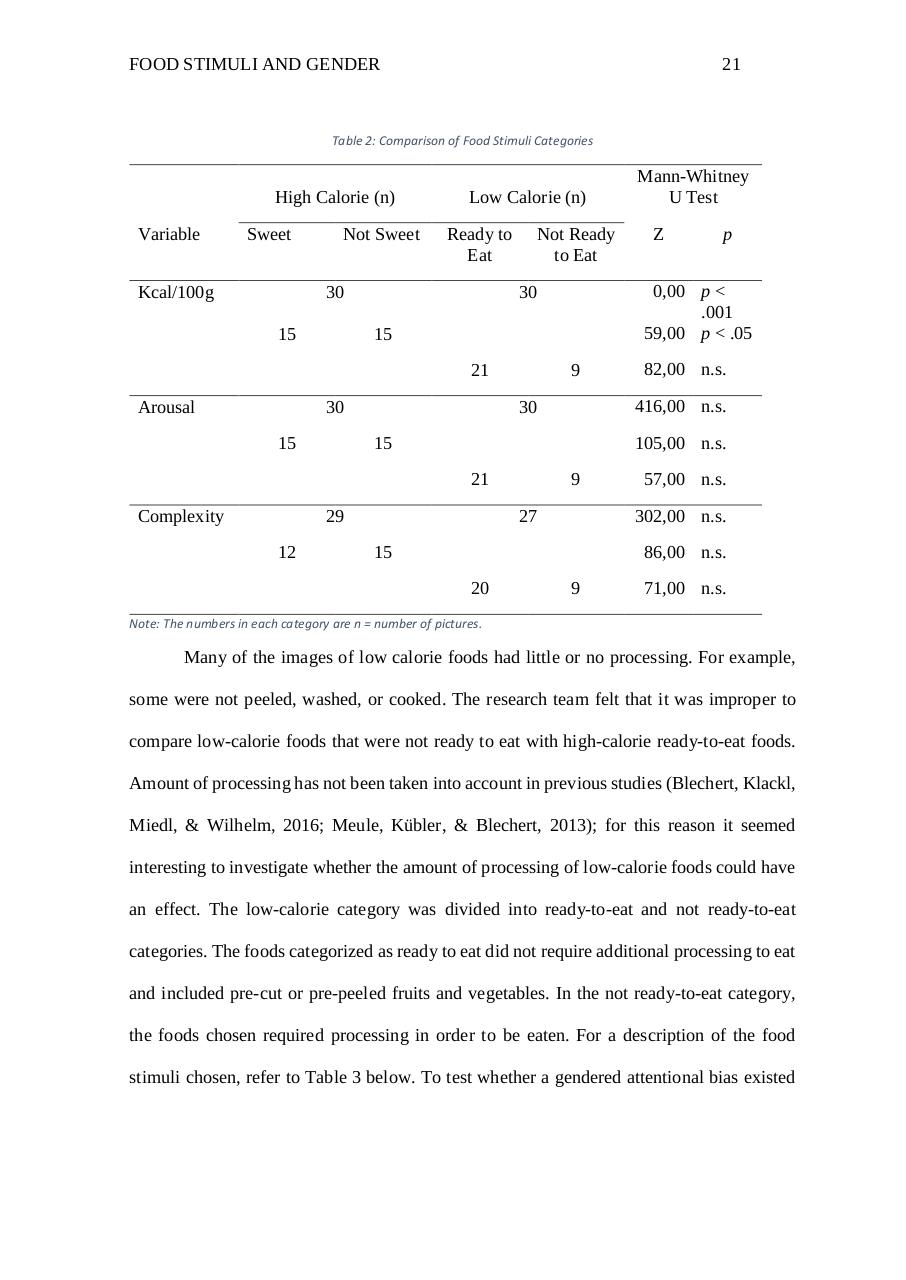
Table 2: Comparison of Food Stimuli Categories
High Calorie (n)
Variable
Sweet
Kcal/100g
Not Sweet
Low Calorie (n)
Ready to
Eat
30
15
Not Ready
to Eat
Arousal
15
30
15
9
82,00 n.s.
105,00 n.s.
15
29
12
p
416,00 n.s.
30
21
Complexity
Z
0,00 p <
.001
59,00 p < .05
30
21
Mann-Whitney
U Test
9
57,00 n.s.
302,00 n.s.
27
86,00 n.s.
15
20
9
71,00 n.s.
Note: The numbers in each category are n = number of pictures.
Many of the images of low calorie foods had little or no processing. For example,
some were not peeled, washed, or cooked. The research team felt that it was improper to
compare low-calorie foods that were not ready to eat with high-calorie ready-to-eat foods.
Amount of processing has not been taken into account in previous studies (Blechert, Klackl,
Miedl, & Wilhelm, 2016; Meule, Kübler, & Blechert, 2013); for this reason it seemed
interesting to investigate whether the amount of processing of low-calorie foods could have
an effect. The low-calorie category was divided into ready-to-eat and not ready-to-eat
categories. The foods categorized as ready to eat did not require additional processing to eat
and included pre-cut or pre-peeled fruits and vegetables. In the not ready-to-eat category,
the foods chosen required processing in order to be eaten. For a description of the food
stimuli chosen, refer to Table 3 below. To test whether a gendered attentional bias existed