
tc3 97 61.pdf
Vista previa de texto
Chapter 3
—
—
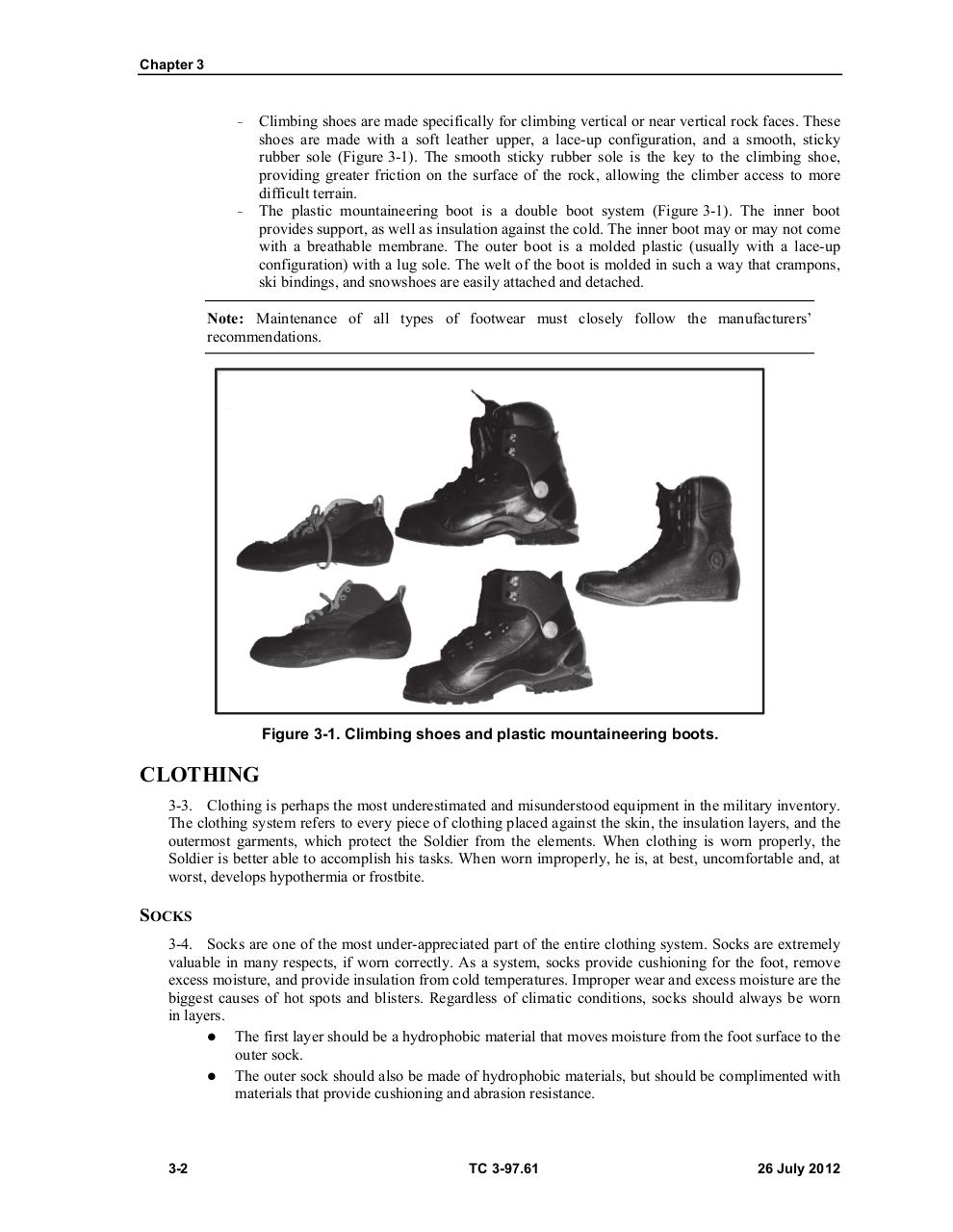
Climbing shoes are made specifically for climbing vertical or near vertical rock faces. These
shoes are made with a soft leather upper, a lace-up configuration, and a smooth, sticky
rubber sole (Figure 3-1). The smooth sticky rubber sole is the key to the climbing shoe,
providing greater friction on the surface of the rock, allowing the climber access to more
difficult terrain.
The plastic mountaineering boot is a double boot system (Figure 3-1). The inner boot
provides support, as well as insulation against the cold. The inner boot may or may not come
with a breathable membrane. The outer boot is a molded plastic (usually with a lace-up
configuration) with a lug sole. The welt of the boot is molded in such a way that crampons,
ski bindings, and snowshoes are easily attached and detached.
Note: Maintenance of all types of footwear must closely follow the manufacturers’
recommendations.
Figure 3-1. Climbing shoes and plastic mountaineering boots.
CLOTHING
3-3. Clothing is perhaps the most underestimated and misunderstood equipment in the military inventory.
The clothing system refers to every piece of clothing placed against the skin, the insulation layers, and the
outermost garments, which protect the Soldier from the elements. When clothing is worn properly, the
Soldier is better able to accomplish his tasks. When worn improperly, he is, at best, uncomfortable and, at
worst, develops hypothermia or frostbite.
SOCKS
3-4. Socks are one of the most under-appreciated part of the entire clothing system. Socks are extremely
valuable in many respects, if worn correctly. As a system, socks provide cushioning for the foot, remove
excess moisture, and provide insulation from cold temperatures. Improper wear and excess moisture are the
biggest causes of hot spots and blisters. Regardless of climatic conditions, socks should always be worn
in layers.
The first layer should be a hydrophobic material that moves moisture from the foot surface to the
outer sock.
The outer sock should also be made of hydrophobic materials, but should be complimented with
materials that provide cushioning and abrasion resistance.
3-2
TC 3-97.61
26 July 2012