
Magnet 8TipsforPresentingDigitalEvidence.pdf
Vista previa de texto
Tip 7: Interpret data to tell a story
When you’re presenting abstract concepts and technical evidence to an audience with little (if any) background in
digital forensics, you can’t simply display raw evidence and expect that they will read between the lines and understand
the story.
Without oversimplifying your findings, your role is to present the data in a manner that is clear and concise. When
possible, try to interpret this data to tell a story. One of the best ways to lead a judge and jury through your evidence
is with visual aids. Often, separate illustrative presentations may be required to give context to complicated evidence.
Tip 8: Use visuals whenever possible
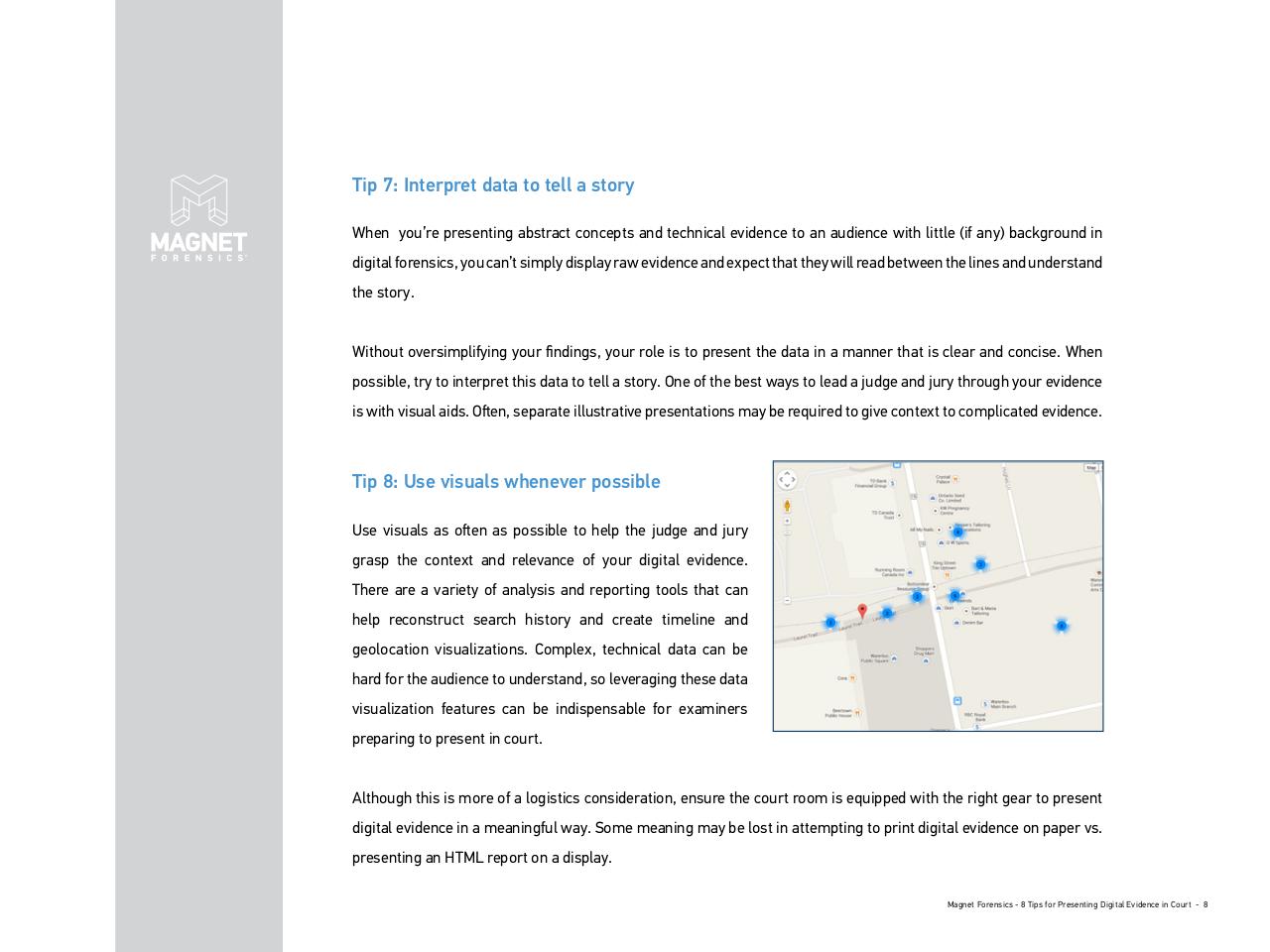
Use visuals as often as possible to help the judge and jury
grasp the context and relevance of your digital evidence.
There are a variety of analysis and reporting tools that can
help reconstruct search history and create timeline and
geolocation visualizations. Complex, technical data can be
hard for the audience to understand, so leveraging these data
visualization features can be indispensable for examiners
preparing to present in court.
Although this is more of a logistics consideration, ensure the court room is equipped with the right gear to present
digital evidence in a meaningful way. Some meaning may be lost in attempting to print digital evidence on paper vs.
presenting an HTML report on a display.
Magnet Forensics - 8 Tips for Presenting Digital Evidence in Court - 8