
ZARZA 2012.pdf
Vista previa de texto
VIDA ESCOLAR
CHARLES DICKENS
His Greatest Works
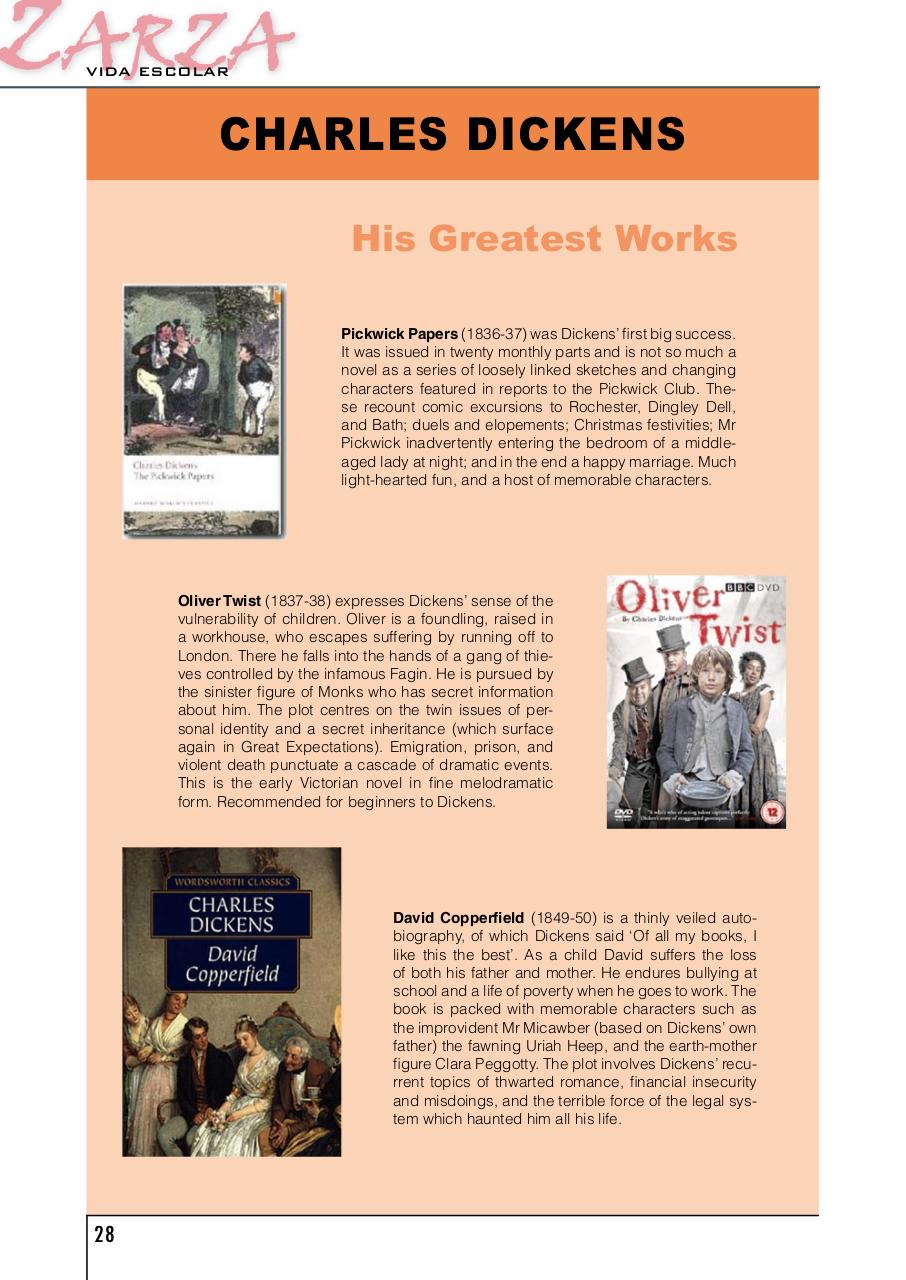
Pickwick Papers (1836-37) was Dickens’ first big success.
It was issued in twenty monthly parts and is not so much a
novel as a series of loosely linked sketches and changing
characters featured in reports to the Pickwick Club. These recount comic excursions to Rochester, Dingley Dell,
and Bath; duels and elopements; Christmas festivities; Mr
Pickwick inadvertently entering the bedroom of a middleaged lady at night; and in the end a happy marriage. Much
light-hearted fun, and a host of memorable characters.
Oliver Twist (1837-38) expresses Dickens’ sense of the
vulnerability of children. Oliver is a foundling, raised in
a workhouse, who escapes suffering by running off to
London. There he falls into the hands of a gang of thieves controlled by the infamous Fagin. He is pursued by
the sinister figure of Monks who has secret information
about him. The plot centres on the twin issues of personal identity and a secret inheritance (which surface
again in Great Expectations). Emigration, prison, and
violent death punctuate a cascade of dramatic events.
This is the early Victorian novel in fine melodramatic
form. Recommended for beginners to Dickens.
David Copperfield (1849-50) is a thinly veiled autobiography, of which Dickens said ‘Of all my books, I
like this the best’. As a child David suffers the loss
of both his father and mother. He endures bullying at
school and a life of poverty when he goes to work. The
book is packed with memorable characters such as
the improvident Mr Micawber (based on Dickens’ own
father) the fawning Uriah Heep, and the earth-mother
figure Clara Peggotty. The plot involves Dickens’ recurrent topics of thwarted romance, financial insecurity
and misdoings, and the terrible force of the legal system which haunted him all his life.
28