
anexo3 Facemasks in the COVID.pdf
Vista previa de texto
there is no direct evidence (from studies on COVID-19) on the effectiveness face masking of
healthy people in the community to prevent infection of respiratory viruses, including COVID19”[2]. Despite these controversies, the potential harms and risks of wearing facemasks were
clearly acknowledged. These including self-contamination due to hand practice or non-replaced
when the mask is wet, soiled or damaged, development of facial skin lesions, irritant dermatitis
or worsening acne and psychological discomfort. Vulnerable populations such as people with
mental health disorders, developmental disabilities, hearing problems, those living in hot and
humid environments, children and patients with respiratory conditions are at significant health
risk for complications and harm [2].
Physiological effects of wearing facemasks
Wearing facemask mechanically restricts breathing by increasing the resistance of air
movement during both inhalation and exhalation process [12], [13]. Although, intermittent
(several times a week) and repetitive (10–15 breaths for 2–4 sets) increase in respiration
resistance may be adaptive for strengthening respiratory muscles [33], [34], prolonged and
continues effect of wearing facemask is maladaptive and could be detrimental for health [11],
[12], [13]. In normal conditions at the sea level, air contains 20.93% O2 and 0.03% CO2,
providing partial pressures of 100 mmHg and 40 mmHg for these gases in the arterial blood,
respectively. These gas concentrations significantly altered when breathing occurs through
facemask. A trapped air remaining between the mouth, nose and the facemask is rebreathed
repeatedly in and out of the body, containing low O2 and high CO2 concentrations, causing
hypoxemia and hypercapnia [35], [36], [11], [12], [13]. Severe hypoxemia may also provoke
cardiopulmonary and neurological complications and is considered an important clinical sign in
cardiopulmonary medicine [37], [38], [39], [40], [41], [42]. Low oxygen content in the arterial
blood can cause myocardial ischemia, serious arrhythmias, right or left ventricular dysfunction,
dizziness, hypotension, syncope and pulmonary hypertension [43]. Chronic low-grade
hypoxemia and hypercapnia as result of using facemask can cause exacerbation of existing
cardiopulmonary, metabolic, vascular and neurological conditions [37], [38], [39], [40], [41], [42].
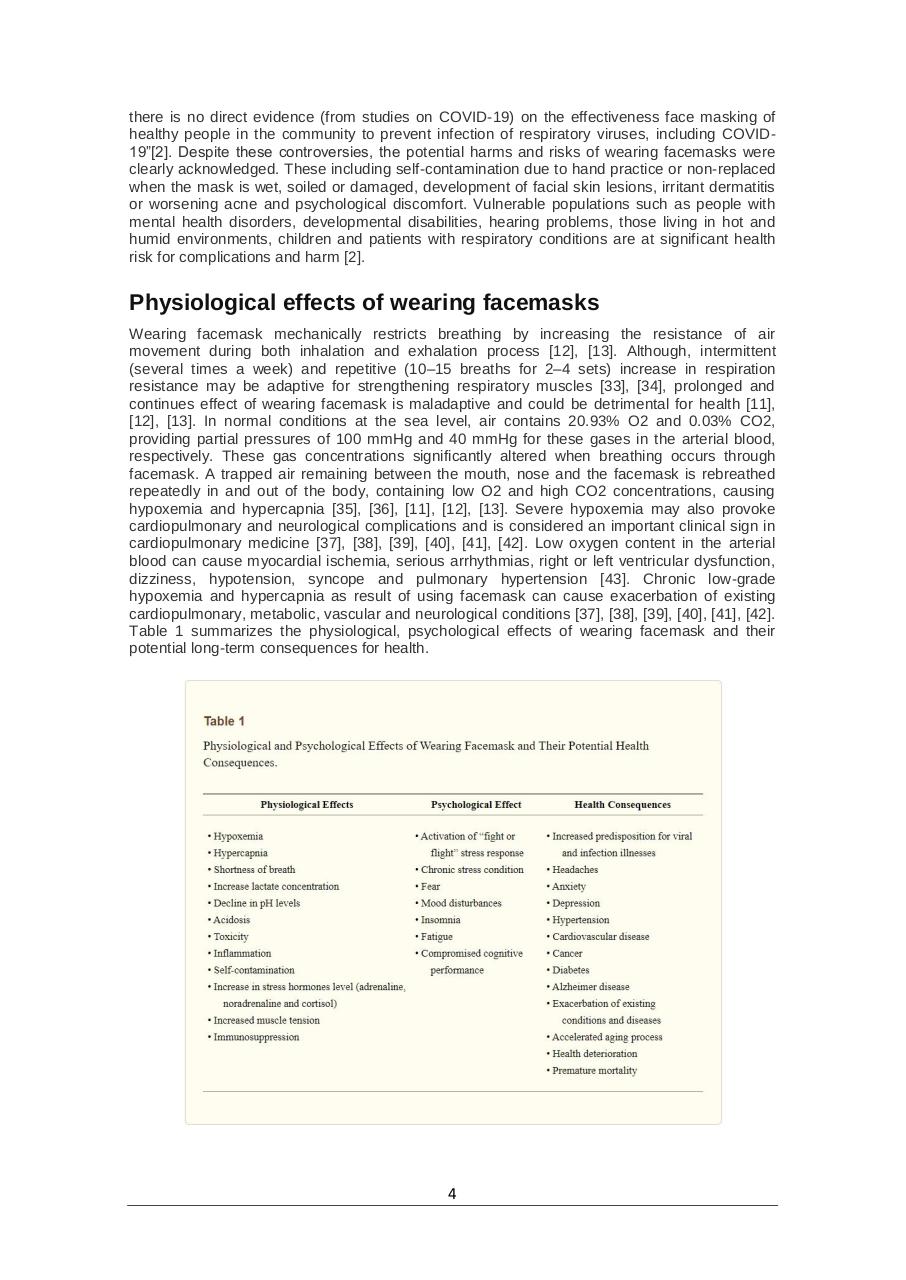
Table 1 summarizes the physiological, psychological effects of wearing facemask and their
potential long-term consequences for health.
4