
Masterarbeit SS 1.2 Final.pdf
Vista previa de texto
FOOD STIMULI AND GENDER
18
that humans exhibit a “weak innate ability to recognize foods with a high energy density and
to appropriately down-regulate the bulk of food eaten to maintain energy homeostasis”
(Prentice & Jebb, 2003). In an experiment, the main variable that influenced meal size was
not level of hunger but the nutrient content of the assortment of foods consumed (Lawton,
Burley, Wales, & Blundell, 1993). It is suggested that individuals have a tendency eat the
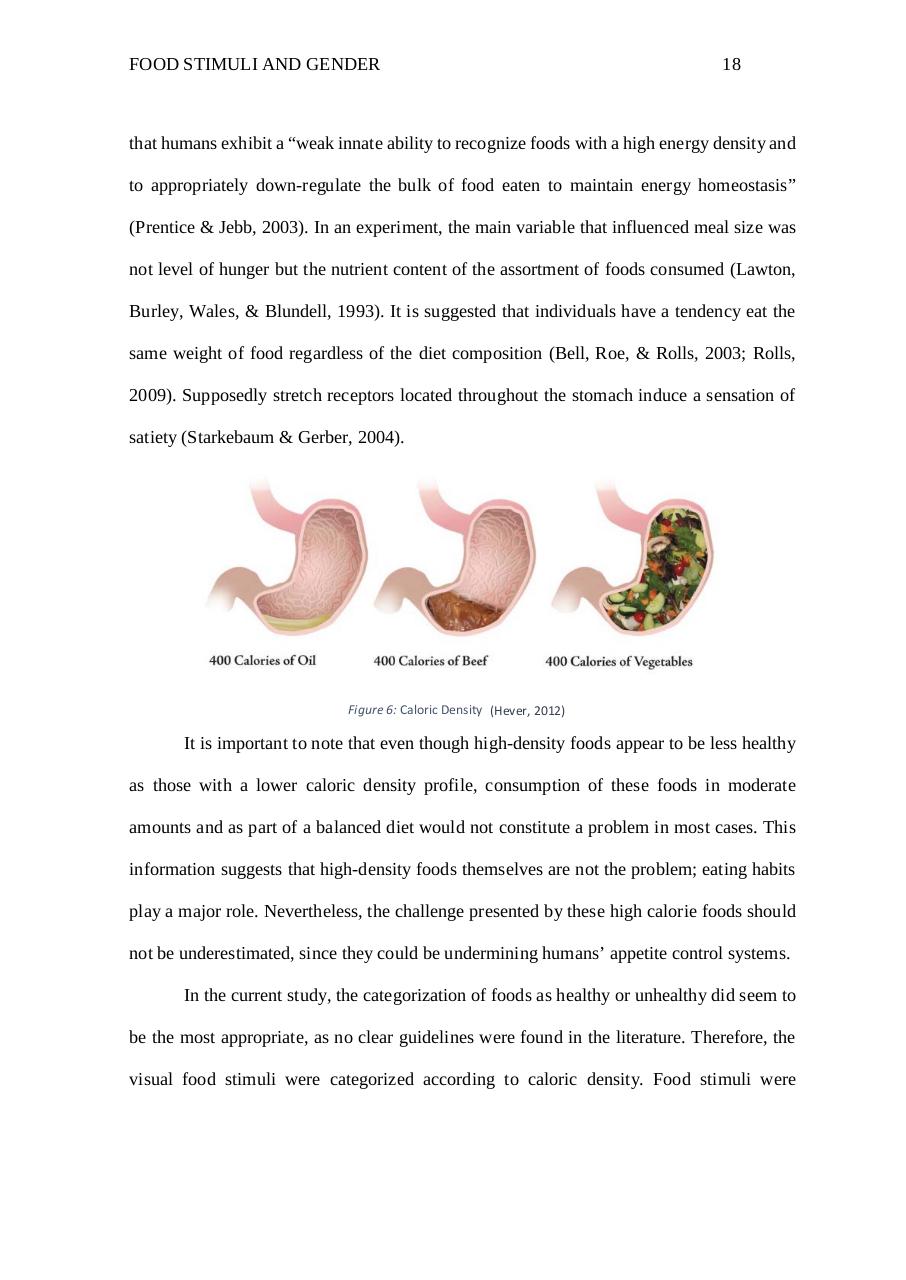
same weight of food regardless of the diet composition (Bell, Roe, & Rolls, 2003; Rolls,
2009). Supposedly stretch receptors located throughout the stomach induce a sensation of
satiety (Starkebaum & Gerber, 2004).
Figure 6: Caloric Density (Hever, 2012)
It is important to note that even though high-density foods appear to be less healthy
as those with a lower caloric density profile, consumption of these foods in moderate
amounts and as part of a balanced diet would not constitute a problem in most cases. This
information suggests that high-density foods themselves are not the problem; eating habits
play a major role. Nevertheless, the challenge presented by these high calorie foods should
not be underestimated, since they could be undermining humans’ appetite control systems.
In the current study, the categorization of foods as healthy or unhealthy did seem to
be the most appropriate, as no clear guidelines were found in the literature. Therefore, the
visual food stimuli were categorized according to caloric density. Food stimuli were