
Products of the Spanish Gastronomy by Carlos Mirasierras.pdf
Vista previa de texto
course dish. It is most commonly eaten during winter as the amount of calories is
extremely high and can be seen as a seasonal dish. This type of meals are currently
served in very small presentations on account of what I said before. In former days this
was the kind of food that village people and peasants ate; they needed a great source
of energy, so all the fats and calories were practically "burned" during their hard work
activity. Asturian cider or red wine are the drinks of choice for this course .
The Asturian bean is very valued for both for its nutritional features and its buttery
taste. The rest of the ingredients contained in the recipe include pork meat, black
pudding (blood sausage), chorizo and raw streaky bacon.
_______________________________________________________
Spanish Cider
The Origin of the word cider comes from the Greek word Sikera. In Latin it appears as
sicera and in the Asturian language (bable) it began to be pronounced sizra and finally
the term cider was thoroughly accepted. Many history documents mention the words
the cider and pomares (plantations of apple trees).
The Spanish Cider has traditionally been made in the north of Spain, specifically in
Asturias. Due to the great demand of this kind of Cider, its production does not cover it,
and so the fields of apples that are used for the production of Spanish Cider had to be
increased.
Thus, when we travel the north of Spain we can find several places in which a
traditionally made cider is served, following the traditional production methods.
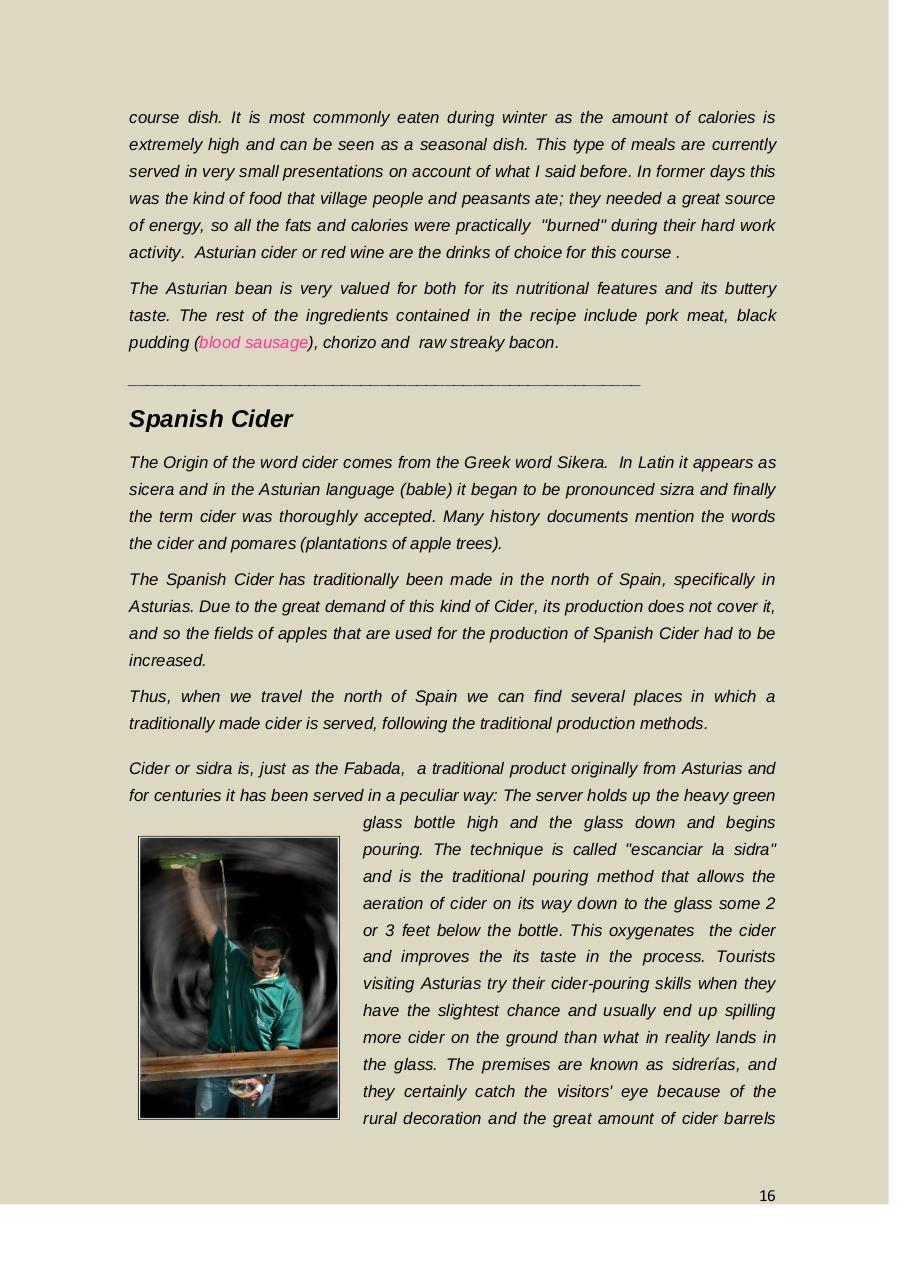
Cider or sidra is, just as the Fabada, a traditional product originally from Asturias and
for centuries it has been served in a peculiar way: The server holds up the heavy green
glass bottle high and the glass down and begins
pouring. The technique is called "escanciar la sidra"
and is the traditional pouring method that allows the
aeration of cider on its way down to the glass some 2
or 3 feet below the bottle. This oxygenates the cider
and improves the its taste in the process. Tourists
visiting Asturias try their cider-pouring skills when they
have the slightest chance and usually end up spilling
more cider on the ground than what in reality lands in
the glass. The premises are known as sidrerías, and
they certainly catch the visitors' eye because of the
rural decoration and the great amount of cider barrels
16