
Products of the Spanish Gastronomy by Carlos Mirasierras.pdf
Vista previa de texto
are several degrees of cheese maturation: The more mature the cheese is, the darker
the yellow color is.
Also, the smell of Manchego has to do with its maturation time, so the greater
maturation degree of the cheese the greater is the intensity of its smell, but in general
its smell is, however its maturation degree is, its average smell is greater than the smell
of many other cheeses. Also, its texture has to do with its maturation degree: the
greater the maturation degree the harder and crumblier its texture.
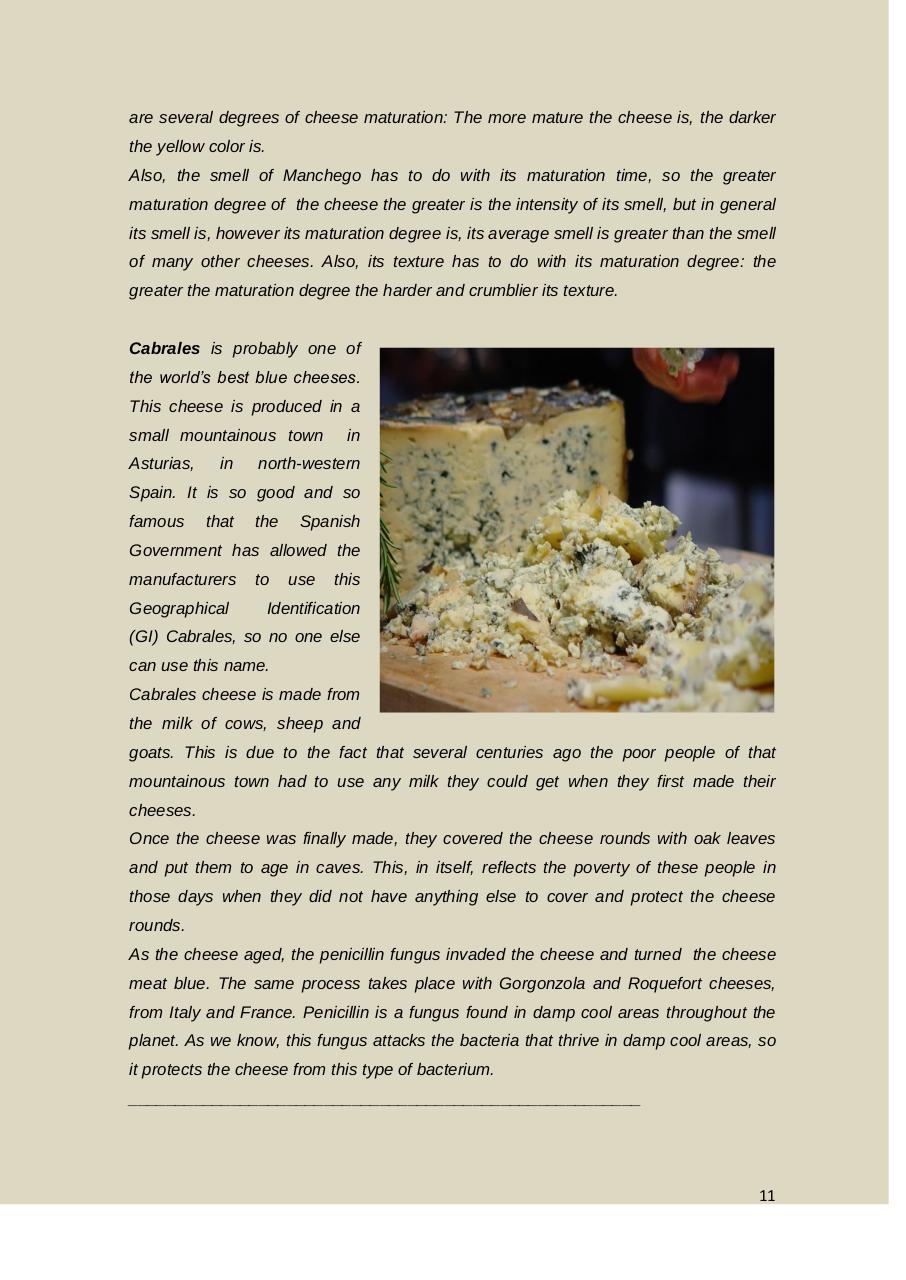
Cabrales is probably one of
the world’s best blue cheeses.
This cheese is produced in a
small mountainous town
Asturias,
in
in
north-western
Spain. It is so good and so
famous
that
the
Spanish
Government has allowed the
manufacturers
Geographical
to
use
this
Identification
(GI) Cabrales, so no one else
can use this name.
Cabrales cheese is made from
the milk of cows, sheep and
goats. This is due to the fact that several centuries ago the poor people of that
mountainous town had to use any milk they could get when they first made their
cheeses.
Once the cheese was finally made, they covered the cheese rounds with oak leaves
and put them to age in caves. This, in itself, reflects the poverty of these people in
those days when they did not have anything else to cover and protect the cheese
rounds.
As the cheese aged, the penicillin fungus invaded the cheese and turned the cheese
meat blue. The same process takes place with Gorgonzola and Roquefort cheeses,
from Italy and France. Penicillin is a fungus found in damp cool areas throughout the
planet. As we know, this fungus attacks the bacteria that thrive in damp cool areas, so
it protects the cheese from this type of bacterium.
_______________________________________________________
11