
Spanish Recipes Carlos Mirasierras.pdf
Vista previa de texto
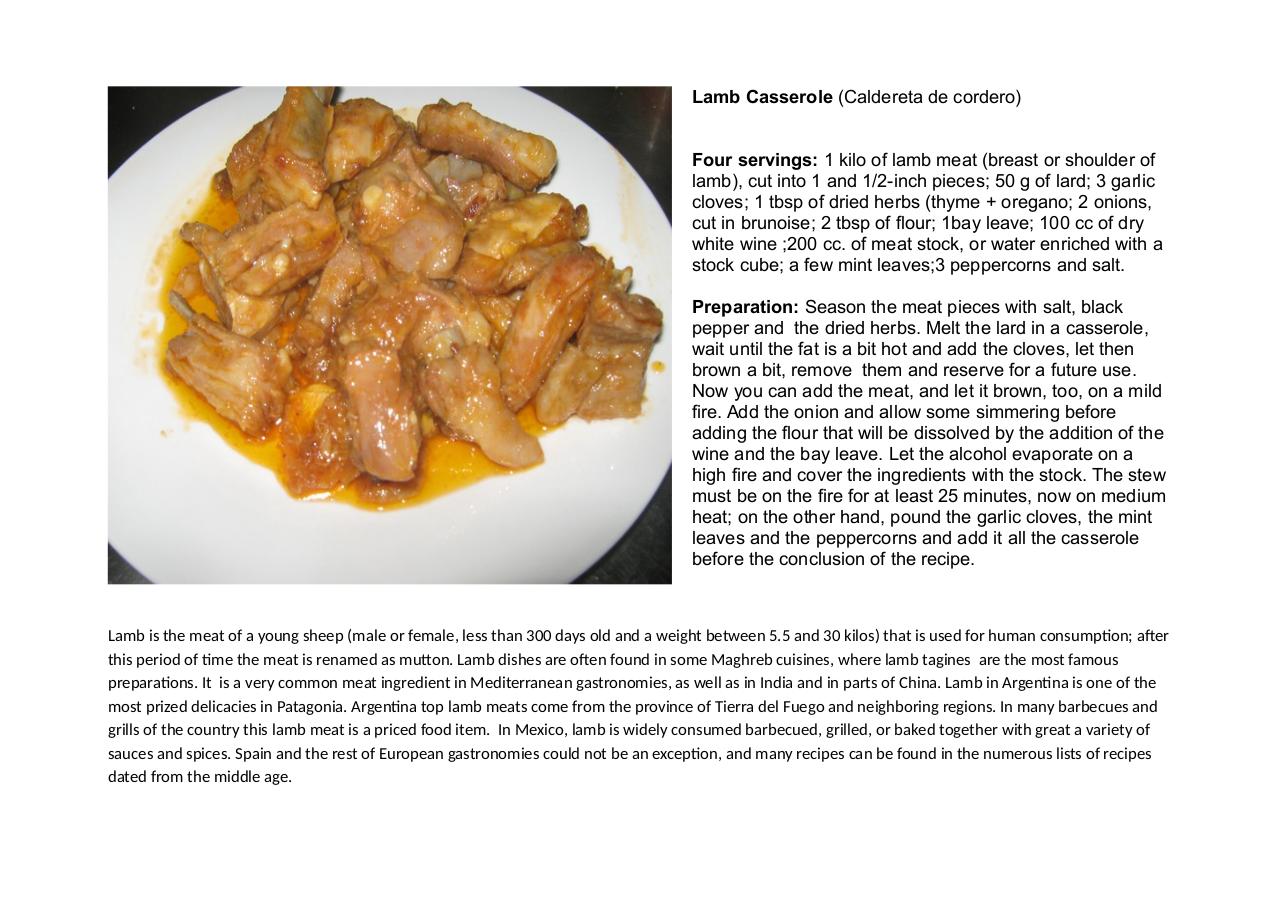
Lamb Casserole (Caldereta de cordero)
Four servings: 1 kilo of lamb meat (breast or shoulder of
lamb), cut into 1 and 1/2-inch pieces; 50 g of lard; 3 garlic
cloves; 1 tbsp of dried herbs (thyme + oregano; 2 onions,
cut in brunoise; 2 tbsp of flour; 1bay leave; 100 cc of dry
white wine ;200 cc. of meat stock, or water enriched with a
stock cube; a few mint leaves;3 peppercorns and salt.
Preparation: Season the meat pieces with salt, black
pepper and the dried herbs. Melt the lard in a casserole,
wait until the fat is a bit hot and add the cloves, let then
brown a bit, remove them and reserve for a future use.
Now you can add the meat, and let it brown, too, on a mild
fire. Add the onion and allow some simmering before
adding the flour that will be dissolved by the addition of the
wine and the bay leave. Let the alcohol evaporate on a
high fire and cover the ingredients with the stock. The stew
must be on the fire for at least 25 minutes, now on medium
heat; on the other hand, pound the garlic cloves, the mint
leaves and the peppercorns and add it all the casserole
before the conclusion of the recipe.
Lamb is the meat of a young sheep (male or female, less than 300 days old and a weight between 5.5 and 30 kilos) that is used for human consumption; after
this period of time the meat is renamed as mutton. Lamb dishes are often found in some Maghreb cuisines, where lamb tagines are the most famous
preparations. It is a very common meat ingredient in Mediterranean gastronomies, as well as in India and in parts of China. Lamb in Argentina is one of the
most prized delicacies in Patagonia. Argentina top lamb meats come from the province of Tierra del Fuego and neighboring regions. In many barbecues and
grills of the country this lamb meat is a priced food item. In Mexico, lamb is widely consumed barbecued, grilled, or baked together with great a variety of
sauces and spices. Spain and the rest of European gastronomies could not be an exception, and many recipes can be found in the numerous lists of recipes
dated from the middle age.