
low light houseplants compared .pdf
Nombre del archivo original: low-light-houseplants-compared.pdf
Título: Low-Light Houseplants Compared: Light, Water and Pet Safety
Autor: Low Light Leaf
Este documento en formato PDF 1.4 fue generado por (unspecified) / ReportLab PDF Library - (opensource), y fue enviado en caja-pdf.es el 28/10/2026 a las 18:17, desde la dirección IP 183.25.x.x.
La página de descarga de documentos ha sido vista 6 veces.
Tamaño del archivo: 5 KB (1 página).
Privacidad: archivo público
Vista previa del documento
LOW LIGHT LEAF
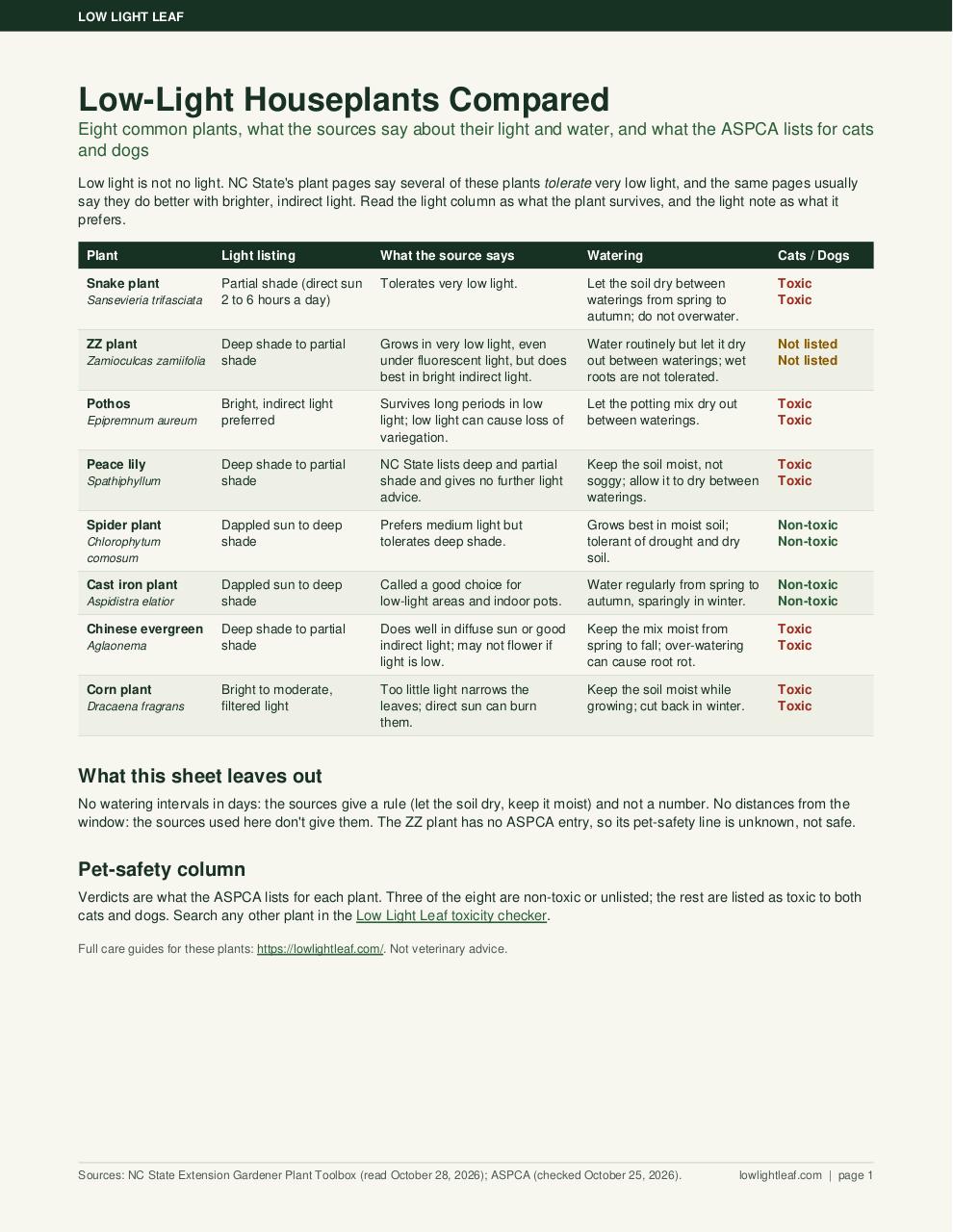
Low-Light Houseplants Compared
Eight common plants, what the sources say about their light and water, and what the ASPCA lists for cats
and dogs
Low light is not no light. NC State's plant pages say several of these plants tolerate very low light, and the same pages usually
say they do better with brighter, indirect light. Read the light column as what the plant survives, and the light note as what it
prefers.
Plant
Light listing
What the source says
Watering
Cats / Dogs
Snake plant
Partial shade (direct sun
2 to 6 hours a day)
Tolerates very low light.
Let the soil dry between
waterings from spring to
autumn; do not overwater.
Toxic
Toxic
Deep shade to partial
shade
Grows in very low light, even
under fluorescent light, but does
best in bright indirect light.
Water routinely but let it dry
out between waterings; wet
roots are not tolerated.
Not listed
Not listed
Bright, indirect light
preferred
Survives long periods in low
light; low light can cause loss of
variegation.
Let the potting mix dry out
between waterings.
Toxic
Toxic
Deep shade to partial
shade
NC State lists deep and partial
shade and gives no further light
advice.
Keep the soil moist, not
soggy; allow it to dry between
waterings.
Toxic
Toxic
Dappled sun to deep
shade
Prefers medium light but
tolerates deep shade.
Grows best in moist soil;
tolerant of drought and dry
soil.
Non-toxic
Non-toxic
Dappled sun to deep
shade
Called a good choice for
low-light areas and indoor pots.
Water regularly from spring to
autumn, sparingly in winter.
Non-toxic
Non-toxic
Deep shade to partial
shade
Does well in diffuse sun or good
indirect light; may not flower if
light is low.
Keep the mix moist from
spring to fall; over-watering
can cause root rot.
Toxic
Toxic
Bright to moderate,
filtered light
Too little light narrows the
leaves; direct sun can burn
them.
Keep the soil moist while
growing; cut back in winter.
Toxic
Toxic
Sansevieria trifasciata
ZZ plant
Zamioculcas zamiifolia
Pothos
Epipremnum aureum
Peace lily
Spathiphyllum
Spider plant
Chlorophytum
comosum
Cast iron plant
Aspidistra elatior
Chinese evergreen
Aglaonema
Corn plant
Dracaena fragrans
What this sheet leaves out
No watering intervals in days: the sources give a rule (let the soil dry, keep it moist) and not a number. No distances from the
window: the sources used here don't give them. The ZZ plant has no ASPCA entry, so its pet-safety line is unknown, not safe.
Pet-safety column
Verdicts are what the ASPCA lists for each plant. Three of the eight are non-toxic or unlisted; the rest are listed as toxic to both
cats and dogs. Search any other plant in the Low Light Leaf toxicity checker.
Full care guides for these plants: https://lowlightleaf.com/. Not veterinary advice.
Sources: NC State Extension Gardener Plant Toolbox (read October 28, 2026); ASPCA (checked October 25, 2026).
lowlightleaf.com | page 1
Descargar el documento (PDF)
low-light-houseplants-compared.pdf (PDF, 5 KB)
Documentos relacionados


Palabras claves relacionadas
listed
shade
between
bright
indirect
plant
partial
toxic
moist
waterings
spring
aspca
state
light
sources