
Gerda malaperis.pdf
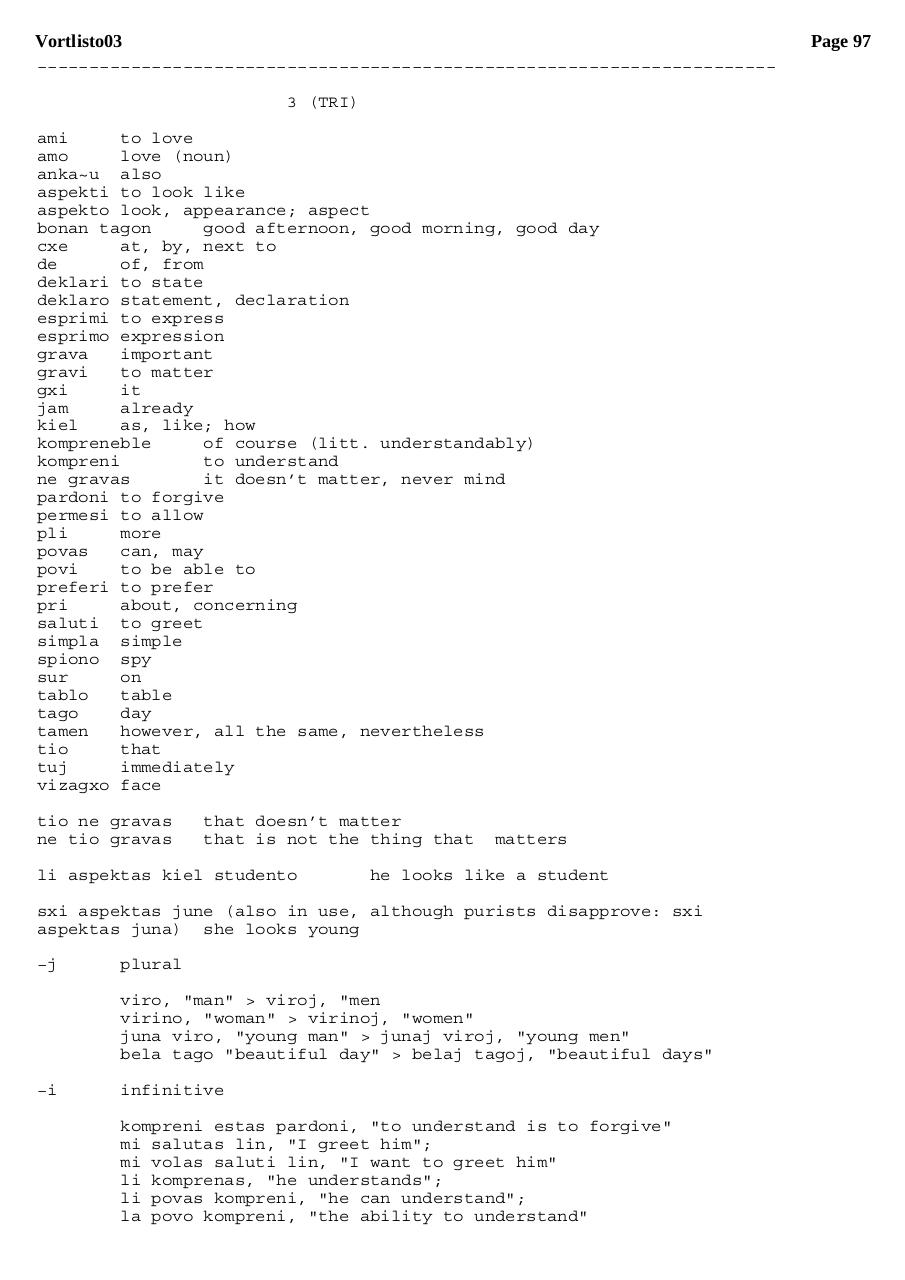
Vista previa de texto
Vortlisto03
Page 97
−−−−−−−−−−−−−−−−−−−−−−−−−−−−−−−−−−−−−−−−−−−−−−−−−−−−−−−−−−−−−−−−−−−−−−−
3 (TRI)
ami
to love
amo
love (noun)
anka~u also
aspekti to look like
aspekto look, appearance; aspect
bonan tagon
good afternoon, good morning, good day
cxe
at, by, next to
de
of, from
deklari to state
deklaro statement, declaration
esprimi to express
esprimo expression
grava
important
gravi
to matter
gxi
it
jam
already
kiel
as, like; how
kompreneble
of course (litt. understandably)
kompreni
to understand
ne gravas
it doesn’t matter, never mind
pardoni to forgive
permesi to allow
pli
more
povas
can, may
povi
to be able to
preferi to prefer
pri
about, concerning
saluti to greet
simpla simple
spiono spy
sur
on
tablo
table
tago
day
tamen
however, all the same, nevertheless
tio
that
tuj
immediately
vizagxo face
tio ne gravas
ne tio gravas
that doesn’t matter
that is not the thing that
li aspektas kiel studento
matters
he looks like a student
sxi aspektas june (also in use, although purists disapprove: sxi
aspektas juna) she looks young
−j
plural
viro, "man" > viroj, "men
virino, "woman" > virinoj, "women"
juna viro, "young man" > junaj viroj, "young men"
bela tago "beautiful day" > belaj tagoj, "beautiful days"
−i
infinitive
kompreni estas pardoni, "to understand is to forgive"
mi salutas lin, "I greet him";
mi volas saluti lin, "I want to greet him"
li komprenas, "he understands";
li povas kompreni, "he can understand";
la povo kompreni, "the ability to understand"